How Leaderboards Drive Engagement in Online Communities
Discover the psychology behind why leaderboards work and how they transform passive members into active community contributors.
Article Contents
Every online community hits the same wall eventually: people sign up, lurk for a bit, then disappear. Doesn't matter if it's a Discord server, a Slack workspace, or an educational platform. Good content alone won't keep people around. You need something that makes them want to show up, contribute, and come back tomorrow.
Leaderboards are that something. They look simple--just a ranked list of names and numbers--but they tap into psychology that's been shaping human behavior for thousands of years. The science behind why this works so effectively goes deep into our evolutionary wiring.
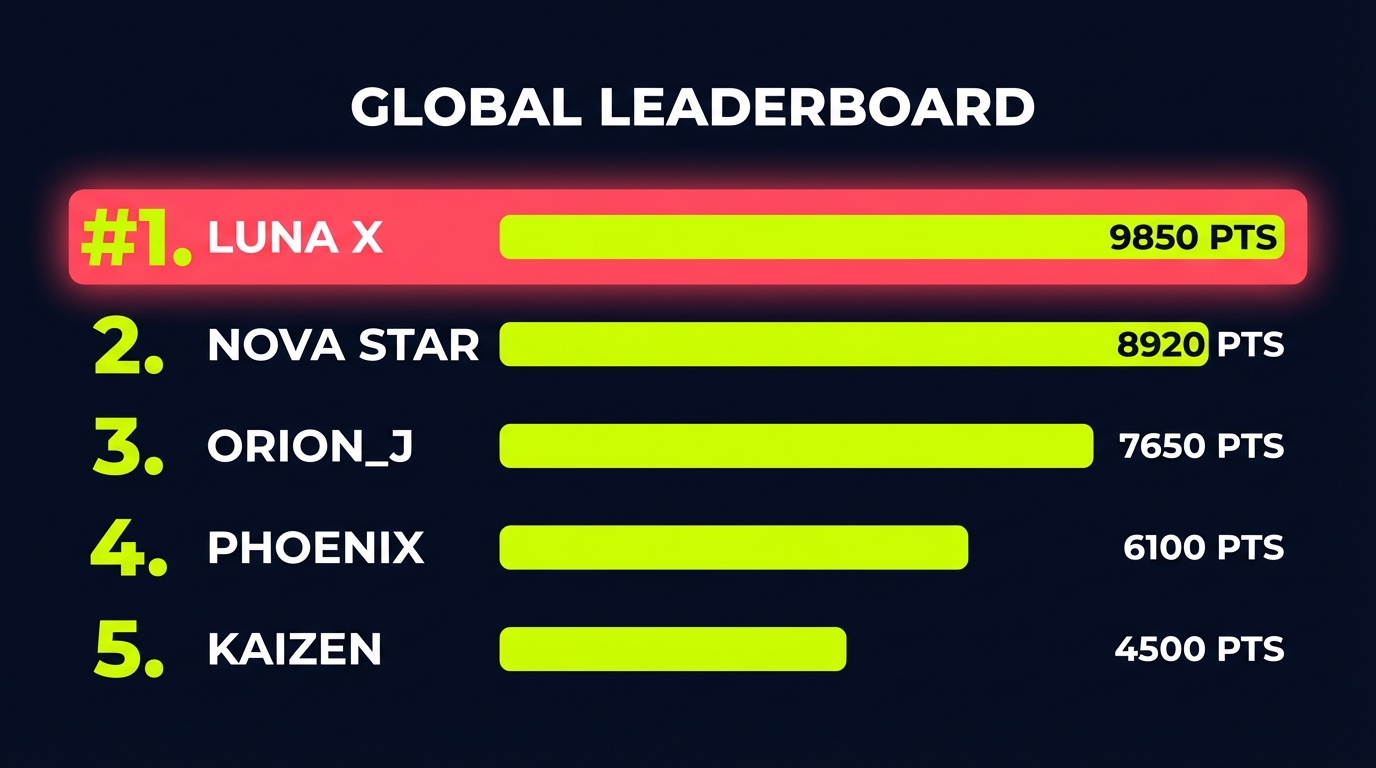
Why We Can't Stop Checking Rankings
We compare ourselves to others constantly. Not out of vanity--it's how our brains are built. Our ancestors needed to know their position in the group to survive. That instinct hasn't gone anywhere. Leaderboards give us instant, objective feedback on where we stand, and that feedback is irresistible.
But there's more going on than social comparison.
Progress is addictive. Psychologist Teresa Amabile's research found that making progress in meaningful work is the single biggest driver of day-to-day motivation. Leaderboards make progress visible. You're not just "getting better"--you're 14th instead of 23rd. That concreteness matters.
Dopamine loops keep us hooked. Every time you climb a spot on a leaderboard, your brain releases dopamine. Same neurotransmitter involved in addiction and pleasure. Achievement triggers dopamine, dopamine triggers motivation, motivation triggers more achievement. It's a loop, and it's powerful.
Seeing others participate validates your own involvement. When your community leaderboard is active, it signals that this place matters, that people care. It strengthens belonging in a way that passive content consumption never can.
Where This Actually Works
Gaming Communities Perfected It First
The gaming world didn't just adopt leaderboards--they refined them into an art form everyone else is still copying. Discord servers running MEE6 and similar bots have turned casual chat rooms into competitive ecosystems where members earn XP for every interaction, climb through levels, and unlock exclusive channels.
One 50,000-member gaming community documented what happened after implementing tiered leaderboards with custom rewards: daily active users tripled and average session time doubled from 15 to 30 minutes. That's not a marginal improvement. That's a transformation.
Then there's speedrunning. Speedrun.com hosts 2 million users who've submitted over 3 million runs across 20,000+ games. People practice single segments for hundreds of hours to save seconds. The leaderboard created an entire subculture where players dissect games frame by frame, share strategies, and build communities around the pursuit of shaving milliseconds off world records.
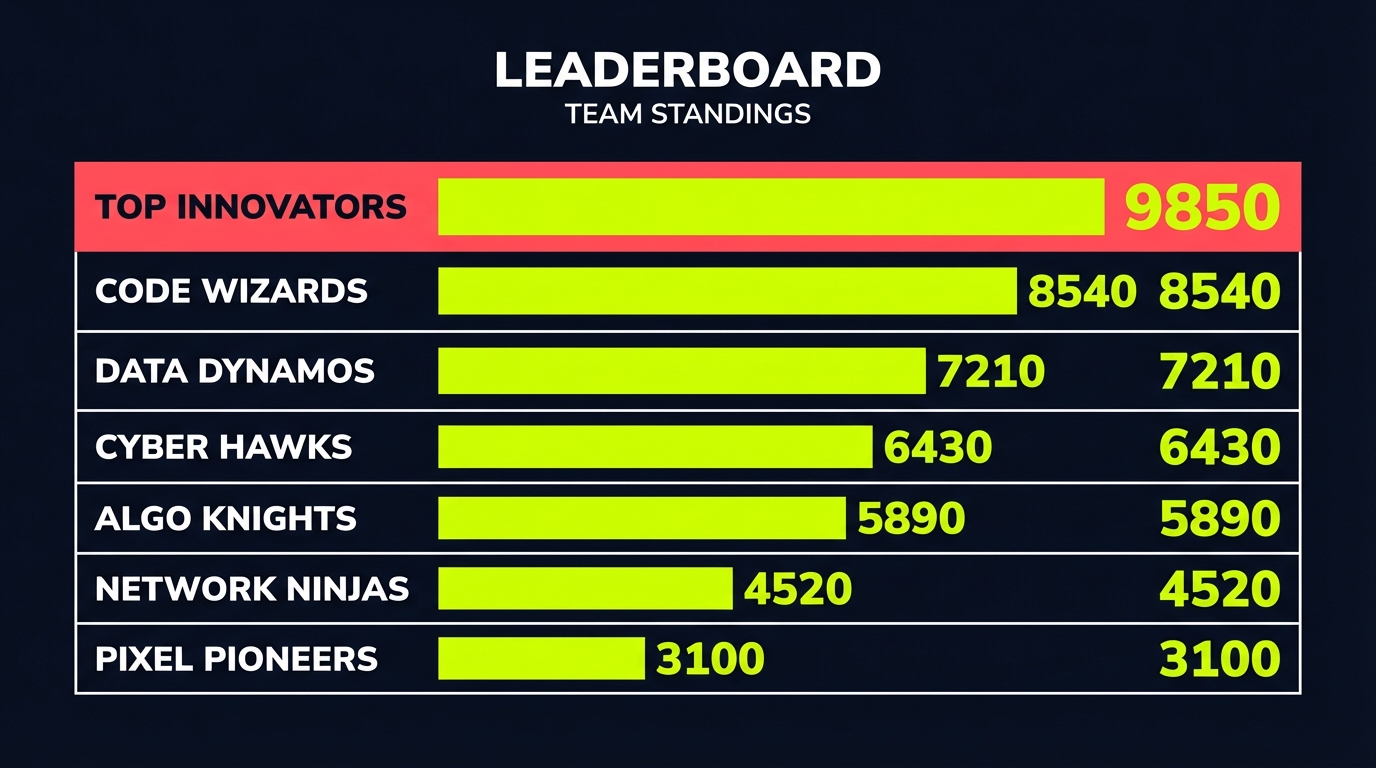
Corporate Teams: Not as Cheesy as You'd Think
When Revolut introduced their Karma System--a public leaderboard tracking things like helping colleagues debug code and volunteering for events--the skeptics called it "childish gamification." Then cross-team collaboration increased by 300%. Employees started spontaneously organizing knowledge-sharing sessions. Documentation improved dramatically. The company's twofold profit increase that year wasn't a coincidence; executives attributed significant portions directly to the cultural shift the karma system created.
Sales teams see some of the most dramatic results. One software company moved beyond tracking just "deals closed" and built a multidimensional leaderboard: customer satisfaction scores alongside revenue, mentorship points, process improvements, collaborative wins. The numbers were striking--40% increase in sales, 60% improvement in team satisfaction, turnover dropping from 35% to 12%. But the real change was cultural. Salespeople who used to hoard leads started sharing opportunities. Veterans mentored newcomers for points. The toxic lone-wolf dynamic gave way to genuine teamwork.
Education: Quiet but Effective
Khan Academy's Energy Points system tracks student progress across subjects with leaderboards at classroom, school, and global levels. Teachers report students voluntarily spending 2-3x more time on the platform after leaderboard implementation. No coercion needed--just visibility.
Duolingo's league system groups learners by dedication level so everyone has a realistic shot at advancing. With 500+ million users, their retention numbers speak for themselves.
Building a Leaderboard That Doesn't Backfire
Start With the Right Question
Before you build anything, answer this: what specific behavior do you want to encourage? And equally important--what might you accidentally discourage?
A fitness community should track workout consistency, not weight lifted. Rewarding raw numbers pushes people toward injury. A coding community should reward code reviews and mentorship alongside project completions, not just lines of code.
Time Diversity Matters More Than You'd Expect
Run multiple leaderboards across different timeframes. Daily boards give people a quick dopamine hit. Weekly competitions maintain momentum without demanding constant attention. Monthly challenges let people pursue bigger goals. All-time rankings create legends and stories that become part of community lore.
If you only run an all-time leaderboard, newcomers will never see a path to the top. If you only run daily leaderboards, nothing feels meaningful. You need both ends of the spectrum.
Measure More Than One Thing
Single-metric leaderboards create monocultures where only one type of person can succeed. That's a community killer.
Smart communities track participation frequency for the reliable contributors, quality through peer voting for the thoughtful experts, helpfulness for the natural mentors, and improvement percentages for newcomers finding their footing. This way, whether someone is a coding genius, a patient teacher, or an enthusiastic beginner, they've got a lane to recognition.
Bracket People Appropriately
Skill-based matchmaking is essential. Beginners competing against veterans isn't motivating--it's demoralizing. Regional groupings account for timezone and cultural differences. Experience divisions prevent ten-year members from dominating newcomers. And critically, make competitive tiers opt-in. Some people want fierce competition. Others want casual participation. Both are valid and valuable.

Team Dynamics Build Community Faster Than Individual Competition
Individual leaderboards drive personal achievement. Team leaderboards build actual community. You want both.
Squad systems (4-6 members) create accountability partners and support networks within the competitive framework. People show up not just for themselves but because their squad is counting on them.
Rotation leagues reform teams periodically, preventing permanent cliques and helping members build connections across the community.
Mentorship pairing matches high-performers with newcomers, rewarding both for collective improvement. This turns potential intimidation into collaborative growth--the veteran gets points, the newcomer gets guidance. Everyone wins.
The Dark Side (And How to Avoid It)
Poorly designed leaderboards can destroy a community faster than having no leaderboard at all.
Toxicity emerges when competition isn't moderated. Implement behavioral scoring alongside performance metrics. Create sportsmanship awards that carry real weight. Moderate harassment swiftly. Reward people for helping struggling members.
Burnout happens when there's no ceiling. Set maximum daily points to discourage unhealthy grinding. Include "rest day" bonuses (yes, reward people for taking breaks). Celebrate consistency over intensity. Provide opt-out options without social penalties.
The rich-get-richer problem is real. Without catch-up mechanics, early leaders entrench their positions and everyone else gives up. "Most improved" categories, percentile rankings, and periodic resets keep things competitive for everyone.
Rolling It Out
Don't launch a fully built system. Start with one metric, track it manually if you have to, display results publicly, and gather feedback. That's week one.
In weeks 3-4, add a couple more metrics, introduce basic rewards like badges or titles, and create weekly challenges. Start segmenting users if the community is big enough.
By month two, introduce team elements, qualification tiers, and special events. Then optimize continuously--A/B test scoring systems, survey satisfaction, adjust based on what you see.

Tools Worth Looking At
For Discord: MEE6 for comprehensive leveling, Arcane for advanced analytics, YAGPDB for custom scripting.
For workplace teams: Leaderboarded for simple, visual leaderboards perfect for office displays. Bonusly for peer recognition with point systems. 15Five for performance tracking with gamification elements.
For education: Classcraft, ClassDojo, and Kahoot each handle different aspects of classroom gamification. For a broader comparison, check out our guide to top gamification tools for schools.
Building your own? Prioritize real-time updates (stale leaderboards kill engagement), mobile optimization, API integration for automated tracking, and data export for transparency.
What to Measure
Track engagement (daily/monthly active users, session duration, return rate, actions per user), community health (30/60/90 day retention, member-to-member interactions, churn rate), behavioral changes (are people doing the thing you wanted them to do?), and sentiment (survey scores, voluntary testimonials, NPS).
The numbers won't tell the whole story. Pay attention to qualitative signals too--are conversations getting richer? Are newcomers sticking around? Are members helping each other without being asked?
Leaderboards aren't magic. They're a tool. Used well, they transform scattered individuals into a community that people genuinely want to belong to. Used poorly, they create anxiety and drive people away. The difference comes down to design: are you building for the humans behind the usernames, or just optimizing for a metric?
Start simple. Listen to your community. Iterate. The best leaderboard systems aren't designed in a vacuum--they're shaped by the people who use them.
Want to create your own community leaderboard? Try Leaderboarded free today and see how friendly competition can transform your community's engagement in minutes, not months.

Written by Caspar von Wrede
Founder of Rise. Building tools that make tournaments effortless — from brackets to round robins.