Corporate Gamification: Boosting Employee Performance with Leaderboards
How workplace gamification transforms company culture, boosts productivity up to 50%, and drives sales — with proven strategies from Microsoft and Deloitte.
Article Contents
In 2019, Microsoft Japan experimented with a 4-day work week and saw productivity jump 40%. What wasn't widely reported: they also gamified the initiative, with teams competing to maintain productivity levels while working fewer hours. Reduced hours plus gamified goals created an engagement spike nobody expected.
Here's the thing about workplace gamification that most articles get wrong. It's not about making work "fun." It's about giving people what annual performance reviews never could: real-time feedback, visible progress, and a reason to care about Tuesday afternoon the same way they care about Monday morning.

The Engagement Problem Nobody Has Solved
Only 23% of employees worldwide feel engaged at work, according to Gallup. Three-quarters of the global workforce shows up physically and checks out mentally. The cost? Somewhere around $450-550 billion annually in the US alone, though honestly those estimates feel conservative when you factor in the institutional knowledge that walks out the door every time someone quits. The average employee now stays 4.1 years before moving on.
We've thrown everything at this problem. Annual reviews that feel like autopsies--too late to change anything. Monetary bonuses that create a two-week dopamine hit and nothing lasting. Corporate retreats with trust falls that everyone makes fun of afterward. Meanwhile, younger employees who grew up with constant feedback from social media and gaming find the workplace feedback desert baffling. They want what games provide naturally: continuous feedback, clear progression, and meaningful challenges.
Traditional solutions have failed. Gamification won't magically fix a toxic culture or terrible management. But for companies that already have a decent foundation, it can dramatically change how people experience their work day.
The ROI Is Hard to Argue With
Companies implementing gamification report some striking numbers: 48% average increase in employee productivity, 40% reduction in error rates, 60% boost in engagement scores, and 25% reduction in turnover. When Deloitte gamified their leadership training program, completion rates jumped 37% and training time dropped by 50%. People weren't just finishing faster--they were retaining more and applying it better.
Those numbers sound almost too good. And yes, the companies that succeed with gamification are self-selecting to some degree. But even if you discount the results by half, the ROI still makes sense.
Why It Works: Psychology, Not Gimmicks
Traditional motivation theory splits incentives into intrinsic and extrinsic. Gamification bridges both, leveraging the deep psychology of competition to create motivation that actually sticks. Give people autonomy over how they earn points. Show them a clear progression system so they can see their skills developing. Connect individual achievements to team success. Make progress visible. Let public leaderboards provide social validation.
Brain imaging studies back this up. Competition triggers dopamine release, enhancing focus and memory. Social recognition activates the same reward centers as financial bonuses. Clear goals reduce cognitive load. Regular feedback loops maintain engagement without burning people out.
Leaderboards: The Most Powerful (and Dangerous) Element
Corporate leaderboards need careful design. Done well, they're the single most motivating component. Done poorly, they create anxiety and resentment.
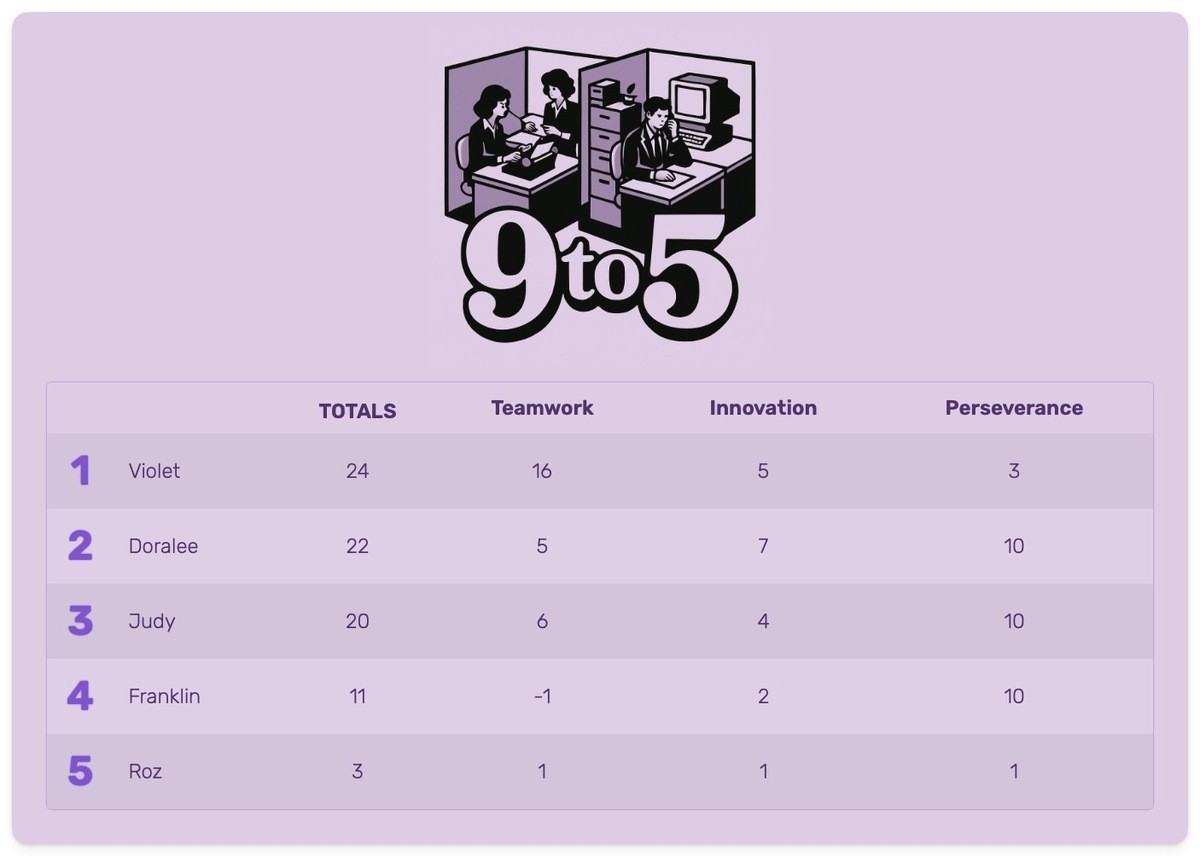
The key is having multiple types. Individual performance rankings for competitive people. Team collaboration scores for those who thrive in groups. Improvement percentages--not just absolute numbers--so that someone who went from terrible to decent gets recognized, not just the person who was already great.
Time-based variations matter too. Real-time dashboards for immediate feedback. Weekly summaries for sustained effort. Monthly boards for strategic objectives. Resetting leaderboards regularly gives everyone a fresh start, which prevents the "why bother, Sarah's been in first place since March" problem.
Real Companies, Real Results
Microsoft's "Compete" Platform
When Microsoft's sales leadership gathered in Redmond for their 2018 strategy session, morale was low. Their global sales force felt disconnected and frustrated with outdated performance metrics that rewarded individual wins over teamwork. Then someone noticed how engaged the office fantasy football league kept everyone, even during the most stressful quarters.
Six months later, Microsoft launched "Compete," a platform that turned sales into a team sport. The system worked like fantasy sports--regions drafted team members, earned points for various achievements beyond just closed deals, and competed in weekly matchups. The genius was in what got tracked: not just revenue but CRM data quality, customer satisfaction scores, and peer assists. Helping a colleague close a deal earned you points. Updating Salesforce became a competitive advantage.
First quarter results: sales jumped 10%, but more importantly, CRM data quality improved 30%. The platform hit 88% voluntary participation. "We thought we were implementing a sales tool," reflects Lisa Chen, VP of Sales Operations. "What we actually did was transform our culture."
Buffer's Radical Transparency
Buffer published every employee's salary online in 2013--not just internally, but for the entire world. Critics called it naive. But Buffer was gamifying compensation itself.
The system treats salary like an RPG character sheet. Every employee starts with a base determined by role level. Years in role and achievements add percentage bonuses. Location adjusts for cost of living. Employees choose between more equity or cash, similar to choosing between armor types.
What makes it work is the transparency. Every employee can see everyone else's "stats" and understand exactly how to level up their own compensation. The result? Zero gender pay gap. Employee satisfaction with compensation hit 94%. Turnover dropped by half.
Target's Cashier Championships
A store manager in Minneapolis noticed her teenage cashiers spent breaks competing in mobile games with the same intensity they avoided during shifts. "They'd race each other in games about serving virtual customers while actual customers waited in our lines."
Target launched Checkout Champions. Cashiers earned points not just for speed but for maintaining conversation while scanning, helping with coupons, remembering regulars' names. Teams competed in weekly battles, with winning stores earning the "Golden Hanger" trophy. Seasonal tournaments during Black Friday became legendary, with cashiers sharing speed-scanning videos on TikTok.
Checkout times dropped 35%. Customer satisfaction jumped 23%. Cashier turnover--traditionally the highest in retail--plummeted 45%. The financial impact: $50 million in additional revenue from faster throughput and increased customer loyalty.
Revolut's Karma System
Revolut created an internal currency called "Karma" where employees earn points for helping colleagues, which unlock perks like remote days and training budgets. After 18 months: 2x increase in cross-team collaboration, 40% reduction in support ticket resolution time, and the highest Glassdoor rating in fintech.
Sales Gamification Deserves Its Own Section
Sales teams are the most obvious fit for gamification. They're already competitive, metrics-driven, and motivated by achievement. But most companies still rely on the same tired quota-based systems that create isolated work, delayed feedback, and motivation that lives and dies with commission checks.
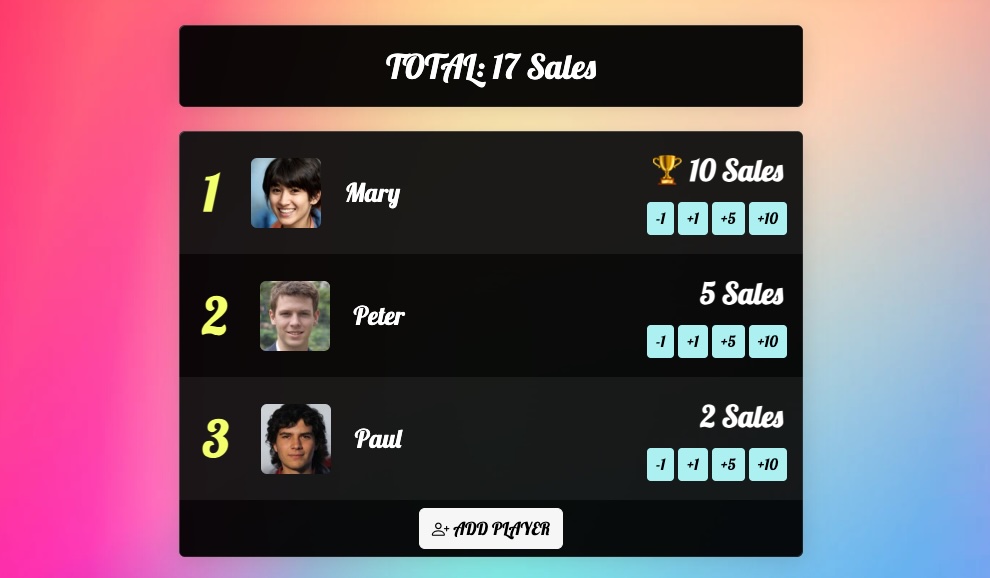
Gamification fixes the feedback loop. Instead of waiting for monthly reports, sales reps see their performance update instantly. Every call logged, demo completed, or deal closed immediately impacts their standing. When you can see you're just two points behind first place, you'll make those extra calls.
More importantly, gamification lets you reward the entire sales process--calls made, meetings booked, proposals sent, follow-ups completed--not just deals closed. This keeps newer reps engaged while they're still building their pipeline. If you only reward closers, everyone else disengages. Create categories where different people can excel.
A solid point system might look like: 10 points for a qualified lead entered, 25 for a demo scheduled, 50 for a proposal sent, 100 for a deal closed, with multipliers for deal size and customer satisfaction. Run daily sprints for immediate energy, weekly tournaments for sustained competition, and monthly championships for bigger recognition.
Organizations implementing sales gamification see 15-30% increases in overall sales performance, 25% more sales activities, and 40% better CRM data quality. The compounding effect of increased activity plus better retention plus faster onboarding far exceeds the investment.
Getting Started Is Simpler Than You Think
You don't need enterprise software. Define 3-5 key metrics to track (not just deals closed). Create a simple point system rewarding both activities and outcomes. Set up a visible leaderboard using Leaderboarded or something similar. Launch a 30-day pilot with your most competitive reps. Gather feedback and iterate before rolling out team-wide.
A basic leaderboard updated daily will drive more impact than a complex system nobody understands.
Implementation: Start Smaller Than You Want To
The biggest mistake I see is companies trying to gamify everything at once. Don't. Pick one team, one set of metrics, and run a pilot with 10-20 enthusiastic volunteers for 4-6 weeks. Get the mechanics right before expanding. Department by department rollout beats a big bang every time.
Spend weeks 1-2 surveying engagement levels, identifying which metrics to gamify, and defining what success looks like. Weeks 3-4, design your point system, badge categories, and leaderboard structure. Weeks 5-8, run your pilot with daily monitoring and weekly feedback sessions. Then expand gradually.
The companies that fail at gamification almost always skip the pilot phase and roll out something untested to 500 people.
Picking the Right Tools
For enterprise-scale deployments, SAP SuccessFactors, Bunchball Nitro, and Centrical are the established players. They're comprehensive but expensive and complex to implement.
For mid-market teams, there's more flexibility. Spinify focuses on sales-specific gamification with TV leaderboard displays. Leaderboarded keeps things simple with visual leaderboards that don't require a PhD to set up--perfect for office displays. Hoopla broadcasts achievements on TVs with Spotify-style playlists for wins.
Building custom is tempting but expensive ($50K-$500K+) and takes longer than anyone estimates. Unless you have very specific integration needs, buy don't build.
For a comprehensive comparison of gamification platforms across different industries, see our complete guide to gamification tools.
The Objections You'll Hear (And How to Handle Them)
"It'll create unhealthy competition." It can, if you design it badly. Make team-based challenges 50% of the system. Reward helping behaviors explicitly. Rotate team compositions. IBM's Think40 program gives bonus points for teaching others, and peer-to-peer learning increased 400%.
"People will game the system." Some will try. A sales team once inflated numbers by creating fake leads. Fix this with quality metrics alongside quantity, peer verification, and consequences for manipulation. Build in checks from day one.
"Our culture isn't ready." Then start with volunteers and early adopters. Share success stories. Address concerns transparently. Every culture that "wasn't ready" had at least a handful of people who were. Start with them.
"It's just a fad." 70% of Forbes Global 2000 companies use gamification. The market's been growing 30% annually since 2015. This isn't going away.
What to Measure
Track participation rates, feature utilization, and session frequency to understand adoption. Track productivity improvements by role, error rates, and speed to competency for business impact. Track revenue per employee, retention rate changes, and customer satisfaction for the bottom line.
But don't ignore qualitative signals. Regular pulse surveys, focus groups, and manager observations will tell you things the data can't. If people are participating but complaining, you've got a design problem regardless of what the metrics say.
Ready to boost your team's performance through gamification? Start with a simple, visual leaderboard that gets everyone engaged. Create your first corporate leaderboard free with Leaderboarded and see productivity improvements within days, not months.

Written by Caspar von Wrede
Founder of Rise. Building tools that make tournaments effortless — from brackets to round robins.