You’ve got 12 teams, a Saturday afternoon, and a vague plan to “run a tournament.” So you Google “tournament bracket template,” download a PDF, and start writing names in boxes with a Sharpie.
Thirty minutes later, someone asks what happens if there’s a tie. Then a team drops out and your carefully filled bracket has a bye in the wrong spot. Then you realize you downloaded an 8-team template and you have 12 teams.
Templates are fine. But the right template depends on three things: how many teams you have, how much time you’ve got, and whether you care more about fairness or speed.
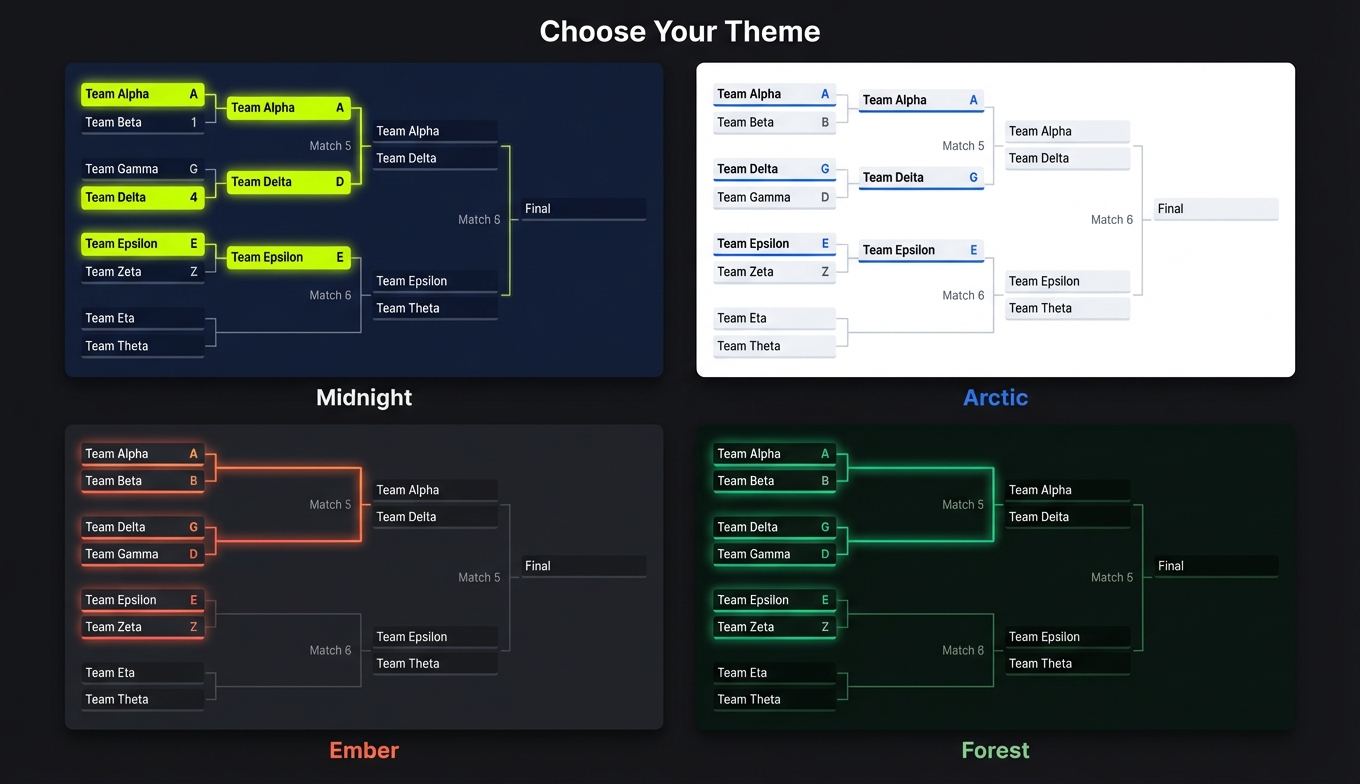
Picking Your Bracket Size
4 Teams
The 4-team bracket is the simplest tournament you can run. Two semifinal matches, one final. Done in under an hour for most sports.
Use it for: pickup games, office challenges, quick playoff-style finishes after a round robin group stage. There’s almost no reason to run double elimination with only 4 teams — single elimination works perfectly and you’re done in three matches.
8 Teams
The 8-team bracket is the sweet spot for most casual events. Three rounds, seven matches. Fits comfortably in a half-day event.
At 8 teams, double elimination becomes viable — you’ll run about 15 matches instead of 7, so plan for a full day. Worth it if you want the two best teams to meet in the final regardless of bracket luck.
16 Teams
A 16-team bracket needs real planning. That’s 15 matches in single elimination across four rounds. Double elimination pushes it to 30+. You need multiple playing areas running simultaneously, someone dedicated to managing the bracket, and a clear schedule communicated to all teams.
This is where paper templates start to break down. Not because they can’t show the bracket — they can — but because updating and communicating changes mid-tournament becomes chaos. Someone always misses the update on the whiteboard.
32 Teams
32-team brackets are full-scale events. Five rounds of single elimination, 31 matches minimum. Most organizers run these over two days or use the first day for group stages to narrow the field.
At this size, you need a digital solution. Not optional. The coordination of 32 teams across multiple venues or time slots requires something that updates in real time and notifies participants when they’re up.
64 Teams
The 64-team bracket is March Madness territory. Six rounds, 63 matches. You’re running a multi-day event with dedicated tournament directors, probably streaming key matches, and definitely not using a PDF printout from the internet.
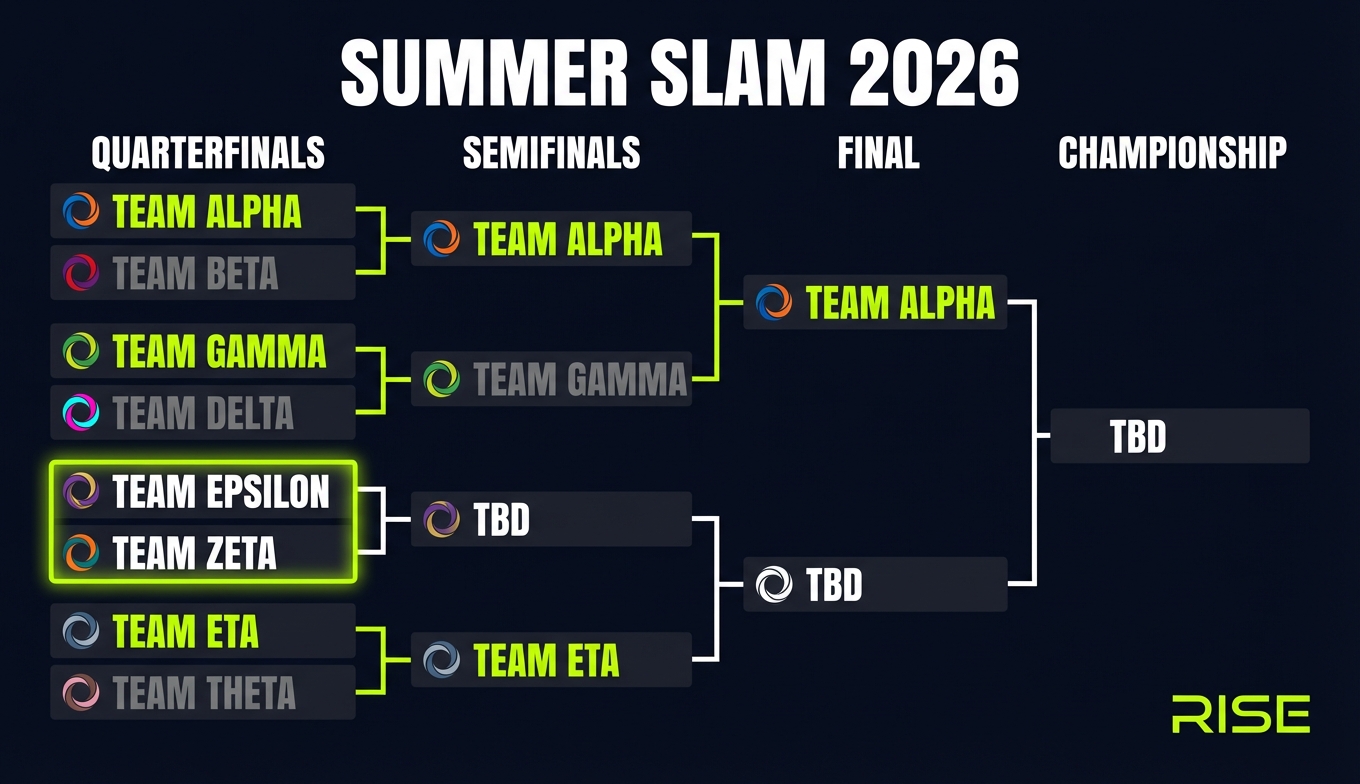
Choosing Your Format
The bracket size tells you scale. The format tells you structure.
Single Elimination
One loss and you’re out. Fast, dramatic, occasionally brutal. The best format when time is limited or the field is large. The worst format when you want the “true” best team to win — a single bad game and your top seed goes home.
Works well for: one-day events, large fields, casual competitions where the journey matters more than the outcome.
Double Elimination
Every team gets a second chance. Two brackets run simultaneously — winners and losers — and you need to lose twice to be eliminated. The double elimination bracket takes roughly twice as long as single elimination but dramatically increases the chance that the best team actually wins.
This is the better format for competitive play. Period. If your event has prizes, rankings, or any stakes at all, double elimination respects the competitors’ time and investment. Read our complete guide to running double elimination tournaments for the details.
Round Robin
Everyone plays everyone. No brackets, no elimination, just a schedule where each team faces every other team once (or twice in a double round robin). Results go on a standings table, and the team with the best record wins.
The round robin generator handles the scheduling math for you — and it’s trickier than you’d think. With 8 teams, you’re looking at 28 matches. With 12, it’s 66. This format eats time, but it’s the fairest way to determine a champion.
Best for: leagues that run over weeks, events with 6-8 teams and plenty of time, situations where every matchup matters (like scouting or tryouts).
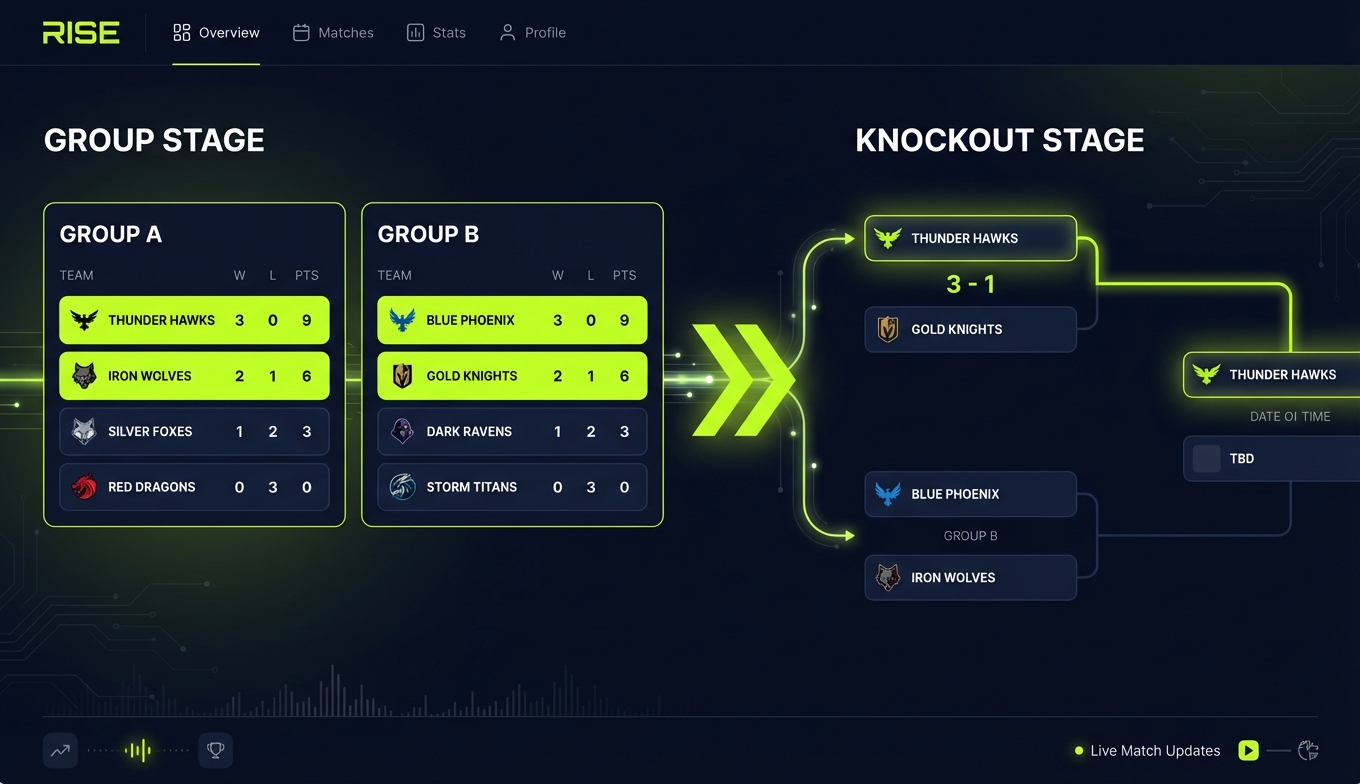
Group Stage to Knockout
The hybrid approach. Split your field into groups of 4, run a round robin within each group, then take the top 2 from each group into a single or double elimination bracket. It’s how FIFA runs the World Cup, and the format works just as well for your 16-team volleyball tournament or ping pong bracket.
Why PDF Templates Fall Short
A static bracket template works when nothing changes. But things always change. Teams arrive late. Matches run long. Someone entered a score wrong and now half the bracket is off.
A tool like Rise’s bracket generator creates the bracket for you based on your team count and format — no hunting for the right PDF, no printing, no Sharpie marks you can’t undo. Scores update live. Participants check their phones to see when they play next. The bracket on the TV display in the venue stays current without anyone touching it.
We’re building Rise to handle all of these formats — single elimination, double elimination, round robin, and group-to-knockout — with real-time updates and zero paper shuffling.
Join the waitlist to get early access.