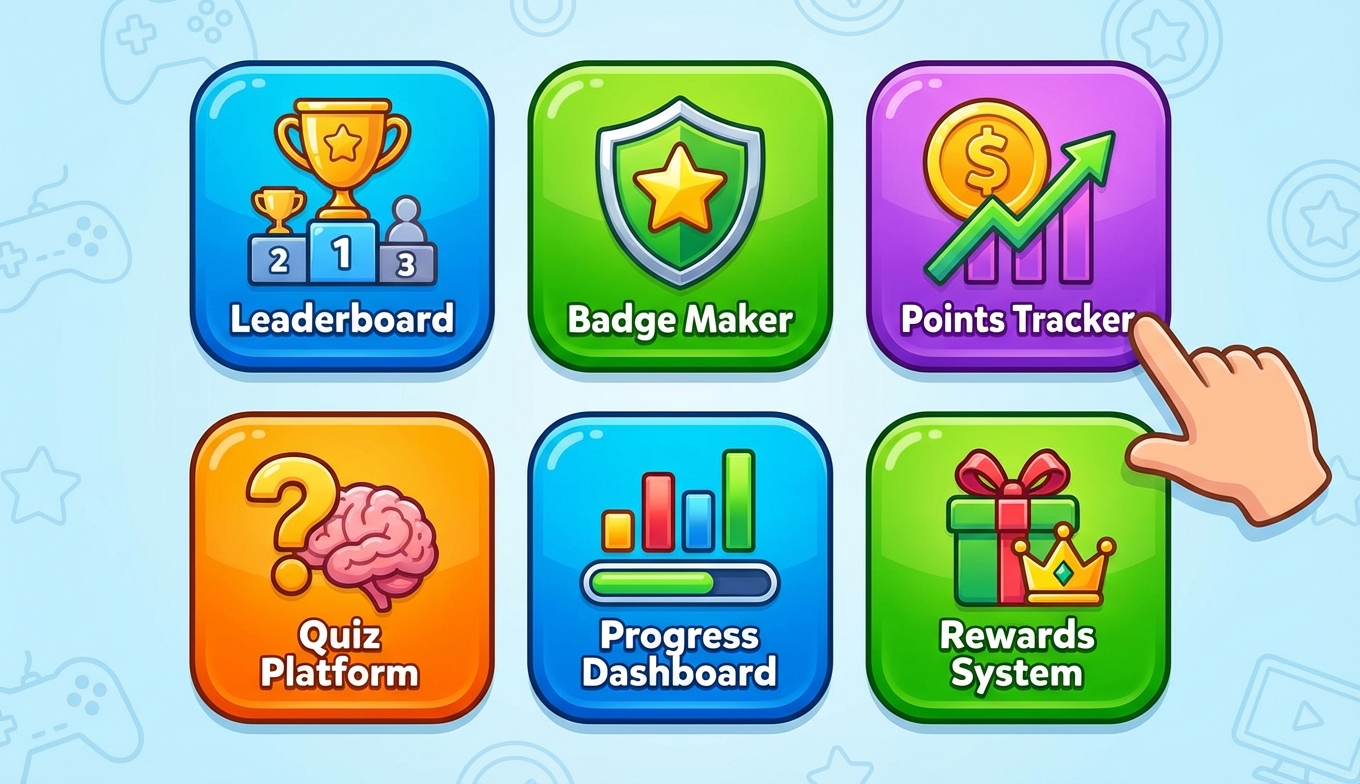
You’re sold on gamification. You’ve seen the numbers—engagement up, completion rates through the roof, real improvements in retention. But now comes the hard part: choosing from hundreds of tools, each claiming to be the “ultimate gamification solution.”
There is no perfect gamification tool. What works brilliantly for a high school classroom will fail spectacularly for a corporate sales team. Context is everything. This guide covers 10 tools across education, workplace, and community settings—with honest takes on costs, strengths, and real limitations. To understand why these tools work at all, read about the psychology behind gamification and leaderboards.

1. Leaderboarded - The One That Just Works
Best For: Anyone who needs a leaderboard running in under 5 minutes Price: Free tier available, paid plans from $19/month Setup Time: 2-3 minutes
Sometimes the best solution is the simplest one. While other platforms promise comprehensive gamification ecosystems with badges, quests, avatars, and complex point systems, Leaderboarded asks a different question: what if you just need a really good leaderboard?
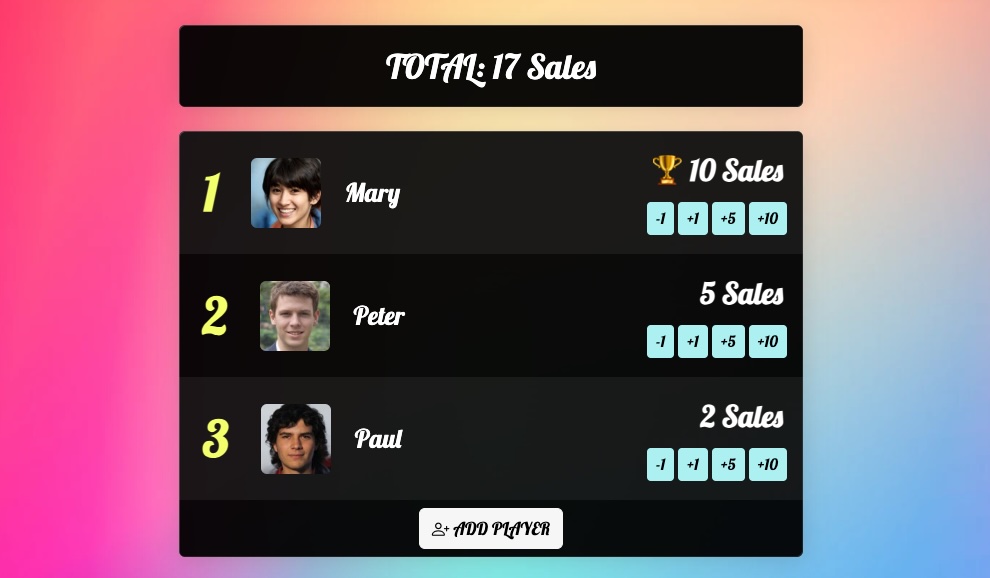
The platform’s radical simplicity is its superpower. No manual to read, no training session to schedule, no IT department to involve. You type in names, add scores, choose colors that match your brand, and within minutes you’ve got a professional leaderboard on your office TV, classroom projector, or event display. It’s gamification stripped to its essential core—the part that actually drives behavior.
The instant setup isn’t just convenient; it’s transformative. When inspiration strikes during a Monday meeting—”let’s track customer satisfaction scores this week”—you can have a leaderboard live before the meeting ends. That immediacy captures momentum that complex platforms kill with their setup requirements. The visual-first design means leaderboards look stunning on 70-inch TVs. Real-time updates create watercooler moments. And the lack of user accounts, counterintuitively, increases participation—nobody can hide behind “I forgot my password.”
It won’t do badges, narrative quests, or complex progression systems. Score entry is manual. The analytics won’t match enterprise-grade BI tools. But these limitations become strengths. Manual entry means human verification. No complexity means zero learning curve. No communication features means it integrates with your existing tools rather than trying to replace them.
“We tried three complex platforms before Leaderboarded,” shares Sarah K., a sales manager at a tech startup. “Salesforce Gamification required consultants. Spinify needed two weeks of configuration. Hoopla crashed our CRM integration. Then someone suggested Leaderboarded. We had it running on our office TV within ten minutes. Our sales increased 30% that quarter. Sometimes simple is better.”
Verdict: Pick this when you want visual impact without technical headaches. Perfect for testing gamification or for teams that need something that just works.
2. Classcraft - The Classroom RPG
Best For: K-12 teachers ready to fully gamify their classroom Price: Free tier, Premium from $8/student/year Setup Time: 2-3 hours initial configuration
Imagine a classroom where students beg for more homework because it helps their wizard level up. Where the class troublemaker becomes a team leader because his warrior keeps everyone alive. Where quiet students find their voice as healers saving their guilds from academic disasters. That’s Classcraft in action.
The platform transforms the entire classroom into a living role-playing game. Students gain experience for their mage, warrior, or healer avatars. They create guilds bound by shared fate. When one student misbehaves, their entire team loses health points. When someone aces a test, everyone in the guild levels up. Real academic performance directly affects game character power.
The narrative integration goes deeper than any other educational platform. Teachers can align storylines with curriculum—the quest to defeat the Grammar Dragon coincides with writing workshops, the journey through Fraction Forest matches the math unit. The behavior management system works because it’s consequential within a narrative students have bought into. When Tommy disrupts class, his warrior takes damage. If he persists, teammates spend powers to resurrect him. Peer pressure starts working toward positive behavior.
The commitment required is real, though. Teachers report 2-3 hours on initial setup, then 30 minutes weekly maintaining the game world. You’re becoming a dungeon master for 30 players. The free tier lacks the features that make the experience magical. Some students—those who don’t connect with fantasy themes—will resist.
Mike T., a 6th-grade teacher in Portland who was ready to quit after 15 years, found it transformative: “Students started policing themselves because bad behavior hurt their team. Homework completion jumped from 60% to 95%. Parent conferences became celebrations instead of behavior complaints. When your worst student becomes your best guild leader because the game gave him purpose—that’s worth any setup time.”
Verdict: This isn’t a tool you dabble with—it’s a philosophy you embrace. Only for committed teachers.
3. Kahoot! - The Quiz That Became a Phenomenon
Best For: Interactive learning and training sessions Price: Free tier, Pro from $17/month Setup Time: 5 minutes per quiz
That unmistakable lobby music starts. Phones come out. The energy shifts. Whether it’s third-graders or Fortune 500 executives, something primal awakens when that colorful geometric screen appears. In the next ten minutes, a routine quiz becomes an event.
Kahoot! didn’t invent the quiz, but they perfected the theater of competitive questioning. The countdown timer creates urgency, the podium music builds tension, the way correct answers launch you up the leaderboard—it transforms mundane assessment into appointment entertainment. Within 30 seconds of sharing a game PIN, every person in the room is connected and ready to compete. No accounts, no passwords. The content library is massive—teaching photosynthesis? There are 500+ ready-to-play Kahoots. Running compliance training? Corporate-appropriate quizzes exist.
The limitation is sustainability. After the fifth Kahoot of the week, even enthusiastic students grow weary. It demands stable internet for every participant. Advanced features hide behind the paywall. And Kahoot creates moments, not movements—it’s perfect for energizing a session but can’t sustain long-term behavior change on its own.
Jennifer L., HR Director at a financial services firm, turned it into her secret weapon: “Mandatory compliance training had 45% completion rates. We turned each module into a Kahoot challenge where departments compete, with leaderboards in the cafeteria. Completion hit 98%. One employee told me, ‘I don’t care about anti-money laundering, but I’ll be damned if accounting beats us again.’”
Verdict: Not a complete gamification solution, but an essential tool for making any learning session memorable.

4. Duolingo for Schools - Language Learning Done Right
Best For: Language teachers and self-directed learners Price: Completely free for schools Setup Time: 15 minutes per class
Duolingo cracked the code on language learning gamification. The schools version adds classroom management while keeping the addictive progression system intact. It’s remarkably effective—34 hours on the platform equals roughly one university semester of instruction. The adaptive difficulty adjusts automatically to each student’s level, tracking covers 40+ languages, and it’s completely free for educational use.
It’s limited to language learning, though. You can’t customize the curriculum sequence, it leans on translation over conversation, and every student needs their own device. But for what it does, nothing else comes close.
“Duolingo handles the repetitive practice that used to eat up class time,” says Maria S., a Spanish teacher. “I can focus on conversation and culture while students master grammar at home.”
Verdict: If you teach languages, you should already be using this.
5. Habitica - Your Life as an RPG
Best For: Personal productivity and habit building Price: Free, Premium $5/month Setup Time: 20 minutes initial setup
What if brushing your teeth earned experience points? What if skipping the gym actually killed your character, forcing your party to spend resources resurrecting you? That’s Habitica, where your real life becomes the game.
The platform takes RPG grinding and redirects it toward actual productivity. Your pixelated avatar grows stronger from completing real-world tasks. That dissertation chapter you’ve been avoiding? It’s a quest boss worth massive XP. Your gym routine? A daily quest that damages your character when missed.
Habitica works where traditional productivity apps fail because it acknowledges a truth: humans are terrible at delayed gratification but excellent at playing games. Flossing tonight won’t prevent cavities for years, but it’ll give you five gold pieces right now for that wizard hat. The social accountability is brutal—join a party for group quests and your failures affect everyone. Skip your dailies and the boss damages your entire party. Users track everything from meditation minutes to glasses of water consumed to pages written.
The dark side is real. Users report anxiety about breaking streaks, staying up late to complete dailies before midnight. The punishment mechanics can transform helpful motivation into harmful obsession. The pixel art feels childish to some. And explaining to your boss that you can’t stay late because your “party needs you for a quest” doesn’t go over well.
Tom R., a PhD student, credits it with saving his academic career: “Writing 500 words earned XP. Going to bed before midnight saved my party from damage. The dissertation that stalled for two years was finished in eight months. Yes, it’s weird that a 30-year-old gets excited about virtual pet dragons. But that dragon represents 200 days of consistent productivity.”
Verdict: You either get Habitica completely or not at all. For the right person, it’s life-changing.
6. Zombies, Run! - Fitness Through Storytelling
Best For: Runners and walkers who need motivation Price: Free with limits, Pro $4/month Setup Time: 5 minutes
Zombies, Run! turns exercise into an immersive audio adventure where you’re saving humanity from zombies. Professional voice acting, 500+ missions, and zombie chases that create natural interval training. It works outdoors, on treadmills, or while walking. Just phone and headphones required.
It’s limited to running and walking. The story won’t appeal to everyone. Premium unlocks the full experience. But for people who need narrative motivation for cardio, nothing else touches it.
“I went from hating running to 5 days a week,” says Ashley M. “The story is so engaging I actually look forward to runs to find out what happens next.”
Verdict: If you struggle with running motivation, try this before buying another pair of shoes.
7. Spinify - Sales Floors on Steroids
Best For: Sales and customer service teams Price: From $30/user/month Setup Time: 1-2 days with integration
Walk into a Spinify-powered sales floor and you’ll know immediately. Massive TV displays show real-time leaderboards with faces. Deal closes trigger confetti explosions on screen, complete with personalized celebration songs. A new lead converted? The whole office knows within seconds.
Spinify pulls data directly from your CRM—Salesforce, HubSpot, Pipedrive—and transforms dry numbers into theater. The platform runs multiple contests simultaneously: daily call volume, weekly revenue, monthly customer satisfaction. This ensures everyone can win something, preventing the “same top performers always win” problem. The mobile app keeps remote workers connected.
At $30+ per user monthly, it’s expensive. A 20-person team runs $7,200 annually minimum. It requires proper CRM integration, meaning IT involvement and compatibility headaches. Without careful management, constant competition can create a toxic pressure-cooker environment. Customization is surprisingly limited for the price.
Robert K., VP of Sales at a SaaS company, was skeptical: “First month after implementation, we hit 140% of target. When our quietest SDR got his first enterprise lead and the whole office erupted in his chosen victory song—the Pokemon theme—he literally cried. That moment created more culture change than five years of team-building retreats.”
Verdict: Worth it for sales teams with clear metrics and competitive DNA. Not for organizations on tight budgets or those wanting subtle motivation.
8. Minecraft Education Edition - Learning by Building
Best For: STEM education and creative learning Price: $5/user/year for schools Setup Time: 1-2 hours per lesson
Tell students they’ll be playing Minecraft in class and something shifts. The kid who never speaks becomes the architect explaining redstone circuits. The struggling student becomes the expert. Microsoft didn’t just port Minecraft to education—they weaponized an entire generation’s obsession for learning.
Students recreate historical civilizations, simulate chemistry experiments with actual periodic table elements, code behaviors using block-based programming, and collaborate on projects impossible in the physical world. Chemistry becomes real when students combine elements to create compounds. History comes alive when students build medieval castles with historically accurate defenses, then test them against siege weapons.
The technical requirements aren’t trivial—every student needs a device capable of running Minecraft smoothly. Distraction potential is real. Teachers need baseline Minecraft familiarity or risk losing credibility. And forcing it into every subject area feels awkward. Teaching grammar through Minecraft is possible but probably not optimal.
David P., a history teacher in Boston: “I assigned a project: recreate ancient Rome from architectural principles. Working aqueducts using water physics. The Colosseum with functioning elevators using redstone. One student spent sixty hours perfecting the Pantheon’s dome. They learned more about Roman engineering in two weeks than previous classes learned all semester.”
Verdict: Powerful for creative and STEM subjects. Requires teacher investment and comfort with the platform.
9. Strava - Where Every Road Is a Racecourse
Best For: Cycling and running communities Price: Free, Premium $12/month Setup Time: 5 minutes
Every hill has a name on Strava. Every stretch of pavement between two arbitrary points has become a battlefield. That random suburban street you’ve biked past a thousand times? It’s now “Maple Street Sprint,” and 847 people have competed for the fastest time.
Strava transformed endurance sports by solving solo training’s fundamental problem: it’s lonely. Your morning run isn’t just exercise—it’s content for followers, ammunition for segment hunting, data for your training log. The killer feature is segments—user-created portions of roads where everyone who passes through gets automatically ranked. That hill you hate? It has 2,000 attempts and a KOM time that seems physically impossible. But you’ll try anyway, because your name at #237 is unacceptable when your riding buddy is #45.
Strava’s gamification has a body count, though. Cyclists have died chasing segment records. The platform had to remove segments from dangerous descents after lawsuits. Privacy concerns are real—public activities reveal home addresses. Military bases banned Strava after soldiers inadvertently revealed secret locations. The segment obsession can destroy structured training plans.
Steve L. bought a bike to save money on London parking: “My commute had seventeen segments. I was last on most. That was unacceptable. Six months later, my commute dropped from 55 to 35 minutes, I’ve lost 20 pounds, and I’m top-10 on three segments. I get genuinely upset when I hit red lights now—not because I’m late but because it ruins my segment times. I’m fitter at 45 than at 25, and it’s because every ride is a competition against thousands of people I’ll never meet.”
Verdict: Essential for serious endurance athletes. Transforms solo training into social competition—but you’ll need self-control.
10. Classtools.net - The Teacher’s Emergency Kit
Best For: Teachers needing quick, custom games Price: Completely free Setup Time: 5-10 minutes per game
Classtools.net is the teaching equivalent of a Swiss Army knife—not pretty, not sophisticated, but incredibly useful. Created by a history teacher who understood that sometimes you need a game in five minutes, not five hours.
The interface looks like it time-traveled from 2005. No slick animations, no gamification psychology—just straightforward tools. Type in vocabulary words, generate a Pac-Man game. Input historical dates, create a matching game. No registration, no student accounts, no password disasters, no GDPR concerns. QR code sharing means students scan and play immediately. The random name picker alone has saved thousands of teachers from “that’s not fair” complaints.
It’s genuinely free because it’s a passion project, not a startup. The dated design won’t get updated because it works. Progress tracking doesn’t exist because that would require student accounts. You get exactly what you pay for—nothing—and somehow that’s enough.
“When I have 10 minutes left in class, Classtools saves me,” says Rachel H. “I can create a review game in 2 minutes that keeps students engaged until the bell.”
Verdict: Won’t transform your classroom. Will save you at 2:45 PM on a Friday.
Picking the Right Tool
For elementary schools, start with Kahoot for engagement and add Classcraft if you’re ready for full gamification. Middle and high school benefits from combining Duolingo for languages, Minecraft for STEM, and Leaderboarded for behavior tracking. University settings work well with Habitica for student productivity and Kahoot for lectures.
For sales teams, choose between Spinify for automated CRM tracking or Leaderboarded for simplicity. General office environments do well with Leaderboarded for challenges and Habitica for productivity. Remote teams can use Strava for wellness and Kahoot for meetings.
For fitness groups, Strava handles running and cycling while Zombies, Run! works for beginners. Learning communities benefit from Duolingo for languages and Kahoot for trivia.
If budget is tight, Duolingo for Schools and Classtools.net are completely free, while Leaderboarded and Habitica have generous free tiers. Best value in the paid tier goes to Kahoot Pro at $17/month and Leaderboarded Pro at $19/month.
Start with one tool. Run a pilot with enthusiastic users. Gather feedback. Expand gradually. Don’t over-gamify immediately, don’t force participation, and don’t ignore the people who aren’t engaging—they’re telling you something. Gamification is a means to an end, not the end itself. The goal is engagement, learning, and achievement—the tool is just the vehicle.
For specific use cases, explore our guides on educational gamification and corporate gamification strategies.
Ready to get started with gamification? Begin with the simplest solution: create your first leaderboard in minutes with Leaderboarded. Free to try, easy to implement, and proven to boost engagement. Your gamification journey starts here.