How Esports and Streaming Communities Use Score Overlays and Leaderboards
Why leaderboards and on-stream overlays are the structural backbone of esports and streaming — and what that means if you're building a community of your own.
Article Contents
A few seconds into any large esports broadcast, the screen fills with data. Player ranks, kill counts, economy, objective control, all updating in real time. Streamers running solo do the same thing on a smaller scale: current rank, session record, sub goals, donation ticker. The visuals look like decoration. They're not. They're the structural reason competitive gaming and streaming work as entertainment products. Strip the overlays away and most of these streams become much harder to follow.
Leaderboards do most of the heavy lifting here. They turn games into stories and individual matches into moments, both for the people playing and for the people watching.
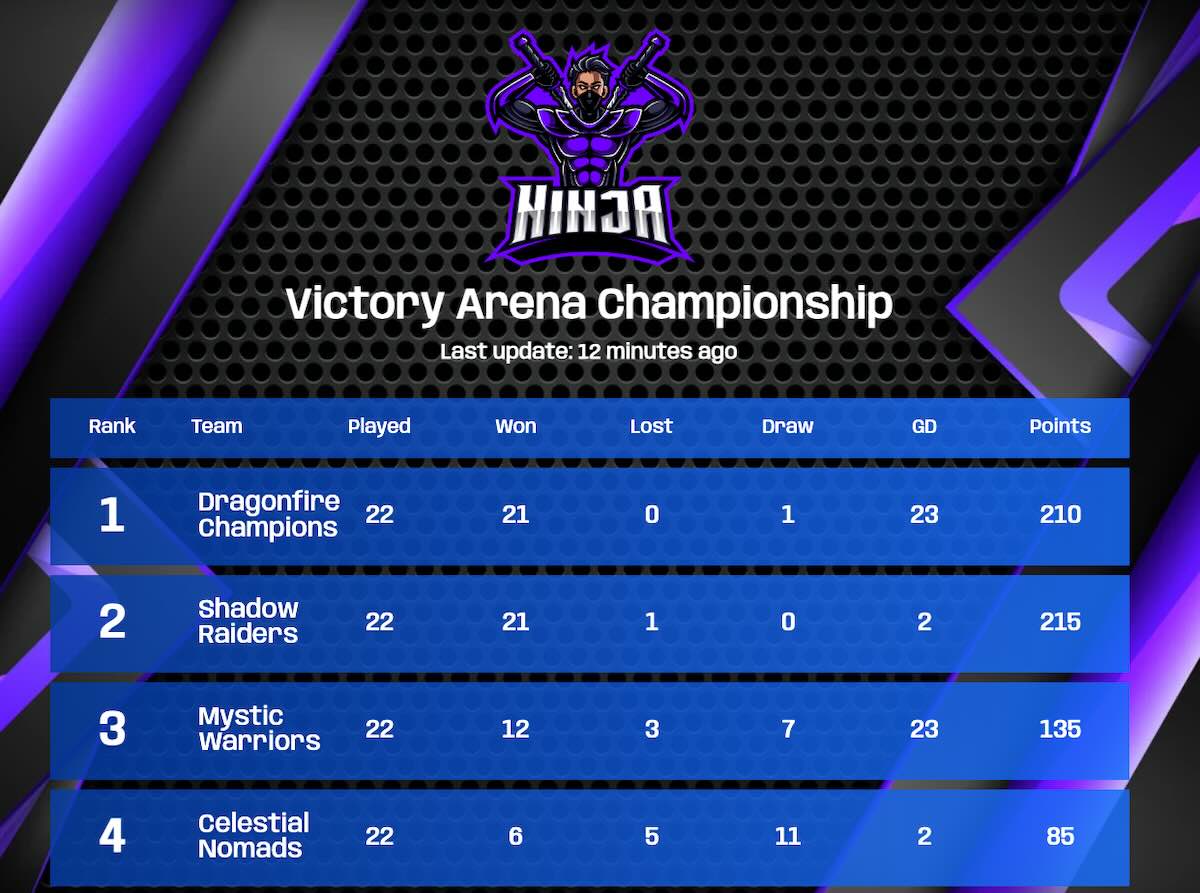
From Arcade Initials to Global Ladders
The shape of this isn't new. Space Invaders saved high scores in 1978 — three letters and a number. Those initials on an arcade machine created local legends and motivated dozens of attempts to dethrone whoever held the top spot. The setup was crude. The psychology was already finished.
What changed is scale. League of Legends ranks tens of millions of players across regional ladders. Counter-Strike's HLTV rankings move actual money around as orgs build rosters. Twitch streamers publish real-time stats that determine their income. The mechanic is the same one Space Invaders used. The audience is just larger and the stakes are real.
A ranking matters because it serves several audiences at once. Players get validation, progression, and matchmaking. Viewers get stakes they can follow. Sponsors get reach metrics and a way to identify rising talent. Tournament organisers get storylines that don't require manual narration. A kill in a random match means very little. A kill that moves you from Diamond to Master, with 50,000 viewers watching, is a moment you can clip. The psychology of competition does the rest.
Ranking Systems
The major games each built their own ranking architecture, and the differences aren't cosmetic.
League of Legends runs a nine-tier ladder, with Challenger gated to roughly the top 200 per region. Decay punishes inactivity at the high end, which keeps the top players visible and active rather than letting them coast on a once-earned rank. The result is a ladder that stays current.
Valorant uses a hidden MMR alongside a visible rank. Where the system thinks you are and where it shows you don't quite match. The gap is intentional — it keeps an aspirational target in sight without making the matchmaking feel arbitrary. Radiant is capped at 500 globally, which makes it scarce in a way percentages can't replicate.
Tournament leaderboards work differently again. Group stage rankings, bracket advancement, points accumulated across multiple events. During matches, audiences see kill counts, gold differential, objective control, and damage numbers update live. The International (Dota 2) layers historical performance and prize pool distribution on top. Every visible stat creates a small narrative the viewer can attach to.
Streaming Overlays
Successful streamers treat their overlays the way TV producers treat broadcast graphics. The standard elements — current rank, session record, KDA, sub goal, event timer, social handles — are not vanity. They give a viewer who arrived 30 seconds ago enough context to understand what they're watching and why it matters.
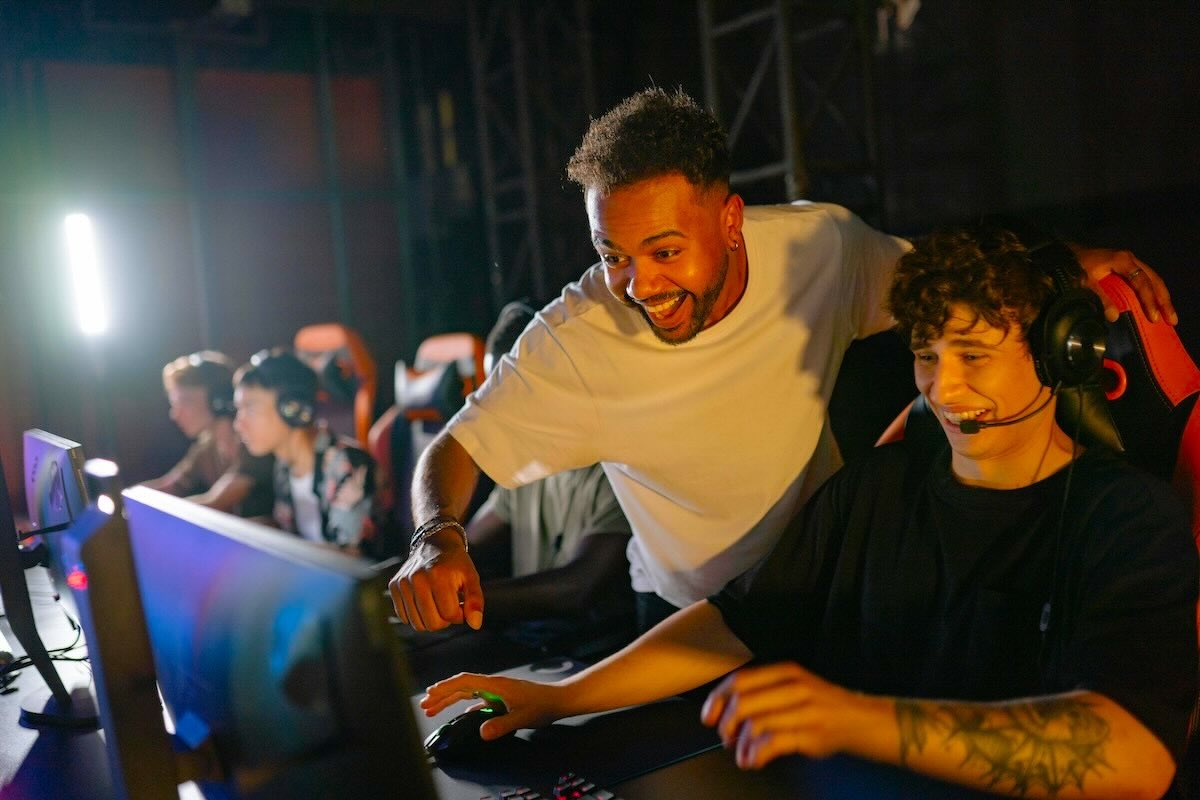
The Climb Format
A rank climb is one of streaming's strongest content shapes. "Unranked to Radiant," "Bronze to GM," "Solo Q to Pred" — these all pre-commit to a narrative arc. Every match has weight, because every match either advances or sets back the story. A loss isn't just a loss, it's a setback. A win isn't just a win, it's progress.
That's why a climb stream pulls in viewers night after night. They want to see whether the streamer breaks through whatever rank they're stuck on. They tune in not because they care about the game state of any individual match, but because they care about the trend. Any time a leaderboard shows a measurable trajectory, you have content people will follow.
Subscriber Tournaments
The streamers with the strongest communities don't only broadcast at their audiences — they compete with them. Subscriber tournaments, weekly brackets, season-long leaderboards. The prize is rarely the point. Showing up on a streamer's leaderboard, visible to thousands of other viewers, is the actual incentive. Recognition from inside the community is denser than recognition from outside it.
Prediction markets work similarly. Twitch's channel points let viewers bet on match outcomes. A seasonal prediction leaderboard tracks whose calls land. Top predictors become recognised community figures, often unpaid, often more invested in the streamer's matches than the streamer is. They're not watching to be entertained. They're watching because they have a position.
Speedrunning
Speedrun.com hosts the leaderboards for an entire subculture. Every game has multiple categories — any%, 100%, glitchless, randomizer — and each category has its own leaderboard, strategies, and dedicated runner community. Super Mario 64 alone splits into hundreds of categories. The granularity isn't excess. It's what allows so many people to be competitive in something specific.
Watch someone going for a world record and you're watching thousands of attempts at the same route, frame-perfect inputs that have been rehearsed into muscle memory, and a human investment that's hard to comprehend if you've never tried it. A runner might spend half a year saving two seconds. The leaderboard is what makes those two seconds matter.
Games Done Quick took the same mechanic and added a charitable layer — runners race through games while donations accumulate, with the donation total functioning as a parallel leaderboard. The dual scoring (speed and money raised) keeps the audience engaged across content that would otherwise be specialised. Aggregate donations across the events have run into the tens of millions.

Discord
If Twitch is where gaming communities perform, Discord is where they live the rest of the week. Leaderboards inside Discord servers create a social structure that holds the community together between streams, tournaments, and patches.
The activity bots — MEE6, Tatsu, and similar — gamify presence. Every message earns XP, every voice minute counts, every reaction adds up. Members watch their level climb, unlock coloured roles, get access to channels reserved for higher ranks. The numbers are arbitrary. The social meaning of being a "level 50 in this server" isn't arbitrary at all.
Custom bots layer on game-specific tracking. A Valorant Discord auto-syncs in-game ranks to roles. A Minecraft server logs blocks placed and deaths. A streaming community pulls in Twitch sub status and watch time. Every one of these is a feedback loop that gives people a reason to come back and check.
The Business Side
Leaderboards directly drive monetisation. Branded leaderboard segments ("Red Bull Clutch Plays"), sponsored climb challenges, sponsor-tied tournament circuits. These are real revenue lines. A creator network with comprehensive leaderboard integration can monetise individual brackets, badges, and challenges separately from the underlying content.
Talent scouting runs through ladders. Professional teams use ranked progression as a discovery tool, with automated tracking of top players, performance metrics across seasons, and behavioural analysis. Faker, the highest-paid League player ever, was found at rank 1 on the Korean ladder before anyone knew his name. Every major path-to-pro programme — League's Proving Grounds, Valorant's Premier, Overwatch's Contenders — sits on top of a leaderboard system. Without the rankings, there's no scouting funnel.
Building Your Own
For Streamers
Pick your core metrics. Wins, KD, rank progression. Set up a basic overlay with StreamElements or Streamlabs. Run weekly or monthly viewer challenges. Display progress visibly. Celebrate milestones live. You can add a custom database, API integration, and aggregate cross-game scoring later. None of that is required for the leaderboard to start doing useful work.
For Community Managers
Leaderboarded for visual leaderboards. Challonge for brackets. Battlefy for full tournament management. A Discord activity bot for ambient engagement tracking.
Start low-stakes. Run fun competitions before competitive ones. Reward participation alongside performance. Run multiple leaderboards in parallel so different people can win different things. The goal is to make the community feel competitive without making it feel exclusionary.
For Tournament Organisers
You need registration and check-in, real-time bracket updates, stream overlay integration, stats aggregation, and post-match reporting. FACEIT works well for CS and Valorant. Battlefy handles multi-game events. Start.gg is the default for fighting games. The right answer depends on your game and your scale.
What Makes a Leaderboard Work
Update in real time. Delays kill excitement. If a big play takes an hour to show up on the leaderboard, the moment is already gone.
Keep scoring readable. A viewer should understand how points work in 30 seconds without help. Complicated scoring creates confusion, not depth.
Reset on a schedule. Permanent advantages punish new joiners and make veterans complacent. Seasonal resets are standard for a reason.
Anti-cheat is non-negotiable. Competitive integrity is the entire foundation. One scandal can wipe out months of community work.
Don't reward toxic behaviour. It's surprisingly easy to design metrics that incentivise trash talk or unsportsmanlike play. Community health beats engagement metrics in every long-term scenario.
The pattern across all of this is consistent. Leaderboards don't just track outcomes. They generate the narratives that make watching, playing, and participating worth doing. Strip them away and esports becomes a series of disconnected matches. Add them and the whole thing becomes a story.
Need a leaderboard for a stream, tournament, or community? Leaderboarded handles the visuals. Free to start, no code required.

Written by Caspar von Wrede
Founder of Rise. Building tools that make tournaments effortless — from brackets to round robins.