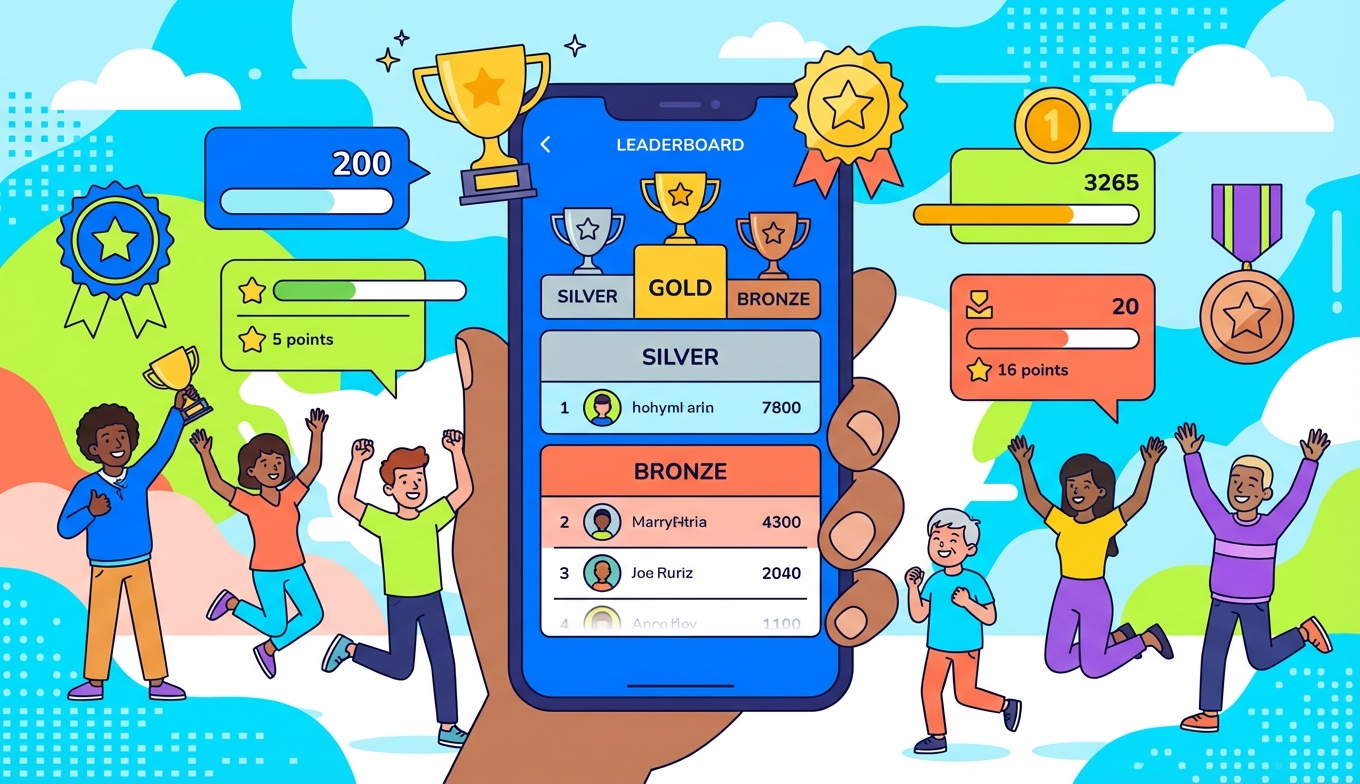
If you’ve ever closed an Apple Watch ring at 11:54pm to keep a streak alive, or done one more Duolingo lesson because the owl looked sad, you’ve already met gamification. It’s not a software category. It’s a design approach. Take the bits of games that make people want to keep playing — points, levels, leaderboards, streaks — and put them into something that isn’t a game.
The framing sounds gimmicky. In practice it just means building feedback loops that respect how people actually work. The reason a sales floor with a live leaderboard outperforms one with monthly review meetings is the same reason fitness apps with rings beat fitness apps with spreadsheets. Visible progress, frequent feedback, and a small bit of social pressure go a long way.
What It Is
Gamification is the use of game design elements in non-game contexts. That’s the textbook definition and it’s accurate but unhelpful. The useful version is: gamification is what you do when you’ve got an activity that humans should care about but find hard to stay engaged with, and you redesign the experience so the engagement comes for free.
Going to the gym is a chore. Closing your activity rings is a small daily game with a streak you don’t want to break. Same activity. Different shape. The shape is what gamification changes.
It only works when the underlying activity is worth doing. Slapping points onto a process nobody believes in won’t fix it — it just makes the bad process more tedious. The cases where gamification fails are usually cases where someone hoped game mechanics would compensate for a fundamentally broken workflow. They won’t.
Why It Works
The mechanics tap into a few things humans reliably respond to. There’s the psychology of competition, which explains most of why leaderboards work, but you don’t need a research paper for the basics.
People care about progress they can see. A bar that fills, a number that ticks up, a streak that’s intact — these all give the brain something concrete to track, which is much easier than tracking some abstract goal that won’t pay off for months. People also care about how they’re doing relative to others, even people who don’t think of themselves as competitive. Knowing you’re #4 of 12 isn’t about wanting to be #1, it’s about not wanting to be #12. That’s enough.
Recognition matters too, even when the recognition is purely symbolic. A virtual badge for a real accomplishment feels good in a way that’s hard to explain until you’ve earned one. The brain doesn’t have a separate category for “real” achievements versus “in-app” achievements. It just has achievements.
And immediate feedback changes behaviour. Traditional goal-setting fails because the gap between effort and result is so long that the connection between the two becomes invisible. Gamification closes that gap. You worked out, your number went up, you can see it. The loop is short enough to feel.
Where You Already See It
Apple Watch. Three rings, a streak counter, and gentle prompts at 9pm if you’re behind. There’s no extrinsic reward and yet people will do star jumps in their kitchen at 11:50pm to close them. The mechanism is loss aversion — once you have a streak, you don’t want to break it — combined with a goal small enough to feel possible on a busy day.
Duolingo. Hundreds of millions of people learn languages on phones now. The streak is the engine. The owl is the persona that delivers the consequence. The league system creates weekly competition with strangers, which keeps the medium-term motivation going past the point where personal commitment alone would have faded.
Sales floors. Large screens showing live rankings. The smarter implementations track the whole pipeline — calls, meetings booked, proposals sent, deals closed — so newer reps can compete on activity while their close rates catch up. This is real territory, and our piece on corporate gamification covers it in more depth.
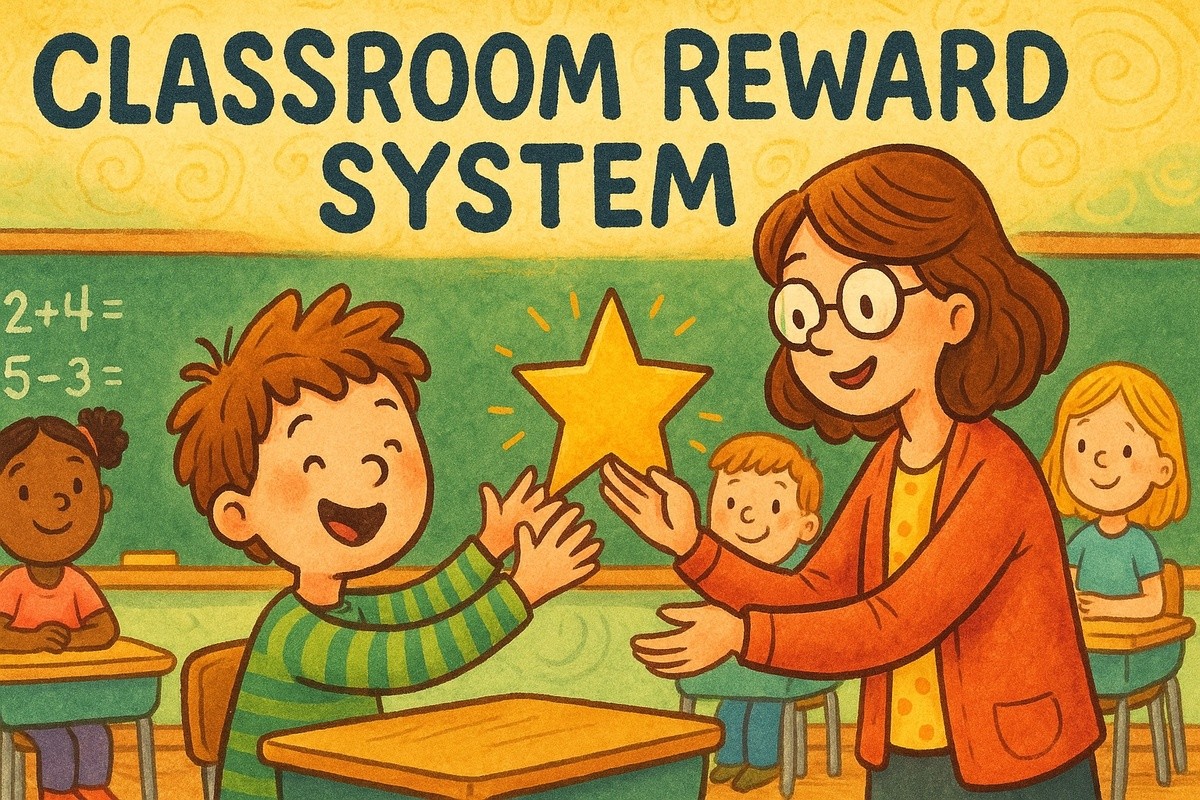
Classrooms. Teachers running points-and-badges systems for homework, participation, helping classmates. Done well, this gives quiet kids a way to earn recognition that their grade alone wouldn’t capture. Our education-specific guide goes through how teachers actually run these.
The Building Blocks
You don’t need all of these to start. A working system might use just one or two.
Points convert effort into something countable. The mistake is over-engineering on day one — five point categories with multipliers and decay rates will lose everyone. Start simple. Three or four ways to earn, clear values, that’s enough.
Levels give people a sense of long-term progression. Each level can unlock something — a new feature, a privilege, a badge — and that “what’s next” is what keeps people engaged past the point where the novelty would otherwise wear off.
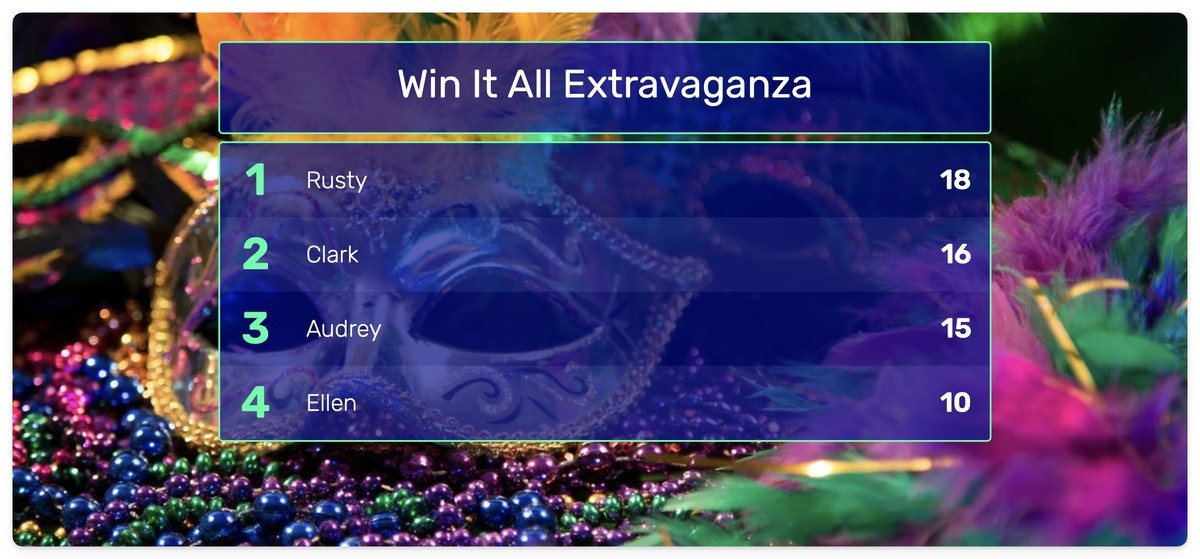
Leaderboards show where you stand. They’re powerful and easy to misuse. If only the top 5% have any chance of being visible, the bottom 95% disengage. The fixes are time-limited boards (weekly resets), bracketing by skill level, and running multiple leaderboards in parallel so different people can lead in different categories.
Badges mark specific accomplishments. The good ones are concrete (“Solved 100 problems”) rather than vague (“Great work”), progressively harder to earn, and visible to other participants. A badge that nobody sees might as well not exist.
Challenges keep things from going stale. Weekly sprints, monthly themes, seasonal events. Without periodic novelty, any system loses energy after a month or two.
How to Implement It
Start with one specific behaviour you want to change. Not “engagement” — too vague. Something measurable, like “homework return rate above 85%” or “weekly active users up 25%.” If you can’t measure it, you can’t gamify it, because there’s no signal that the system is working.
Know which type of player you’re designing for first. Some people want to win the leaderboard. Some want to collect every badge. Some only show up if it’s a team thing. You don’t need to satisfy everyone in the first version, but you should know which group is your priority.
Launch with one mechanic, not five. Let people get comfortable with how points work before adding leaderboards. Add leaderboards before badges. Layer complexity in. Most failed gamification systems failed because they shipped a complicated v1 nobody understood.
Reward the right behaviour. If you want quality, don’t just count quantity. If you want collaboration, include team-based scoring. The mechanics will amplify whatever you point them at — so be deliberate about what you’re encouraging, because you’ll get more of it.
Be transparent about the rules. People need to understand how points are earned, how rankings work, when rewards happen. Confusion creates suspicion, and suspicion kills participation faster than any other failure mode.
Refresh regularly. Rotate the leaderboard timeframe. Introduce new challenges. Add seasonal themes. A static system gets predictable, and predictable means boring.
Common Failure Modes
The most common is over-building on launch. Everyone wants to ship the full vision on day one. Don’t. The full vision is what you build toward over months, after you’ve watched real people interact with v1 and found out which parts of your design were correct and which weren’t.
The second is rewarding only winners. If the same three people are at the top of every leaderboard, the rest of the group stops caring. Most-improved categories, team competitions, and skill brackets all help with this. The goal is for everyone to feel competitive on at least one dimension.
The third is replacing intrinsic motivation. If the only reason people do the activity is to earn points, the whole thing collapses the moment you remove the points. Gamification works best when it amplifies motivation that already exists, not when it tries to manufacture motivation from scratch.
The fourth is bad ergonomics. If checking your score is annoying, or the leaderboard is hard to find, or updating progress is clunky, people stop. The mechanics need to be at least as smooth as the games that inspired them, or the comparison works against you.
Tools
Don’t overthink this. For a basic visual leaderboard with custom branding, Leaderboarded is straightforward. Education-specific options like Kahoot, ClassDojo, and Classcraft do more around behaviour tracking and quiz-based competition. For personal habit tracking, Habitica is the dedicated tool. Strava covers fitness. Forest covers focus time.
A spreadsheet works for the smallest scale. Most teams move off the spreadsheet around the time updating it becomes a job nobody wants.
Knowing If It’s Working
Three things to track. Participation rate — what fraction of your population is actively engaging, and is that number trending up. Behaviour change — are people actually doing more of the thing you wanted them to do, or are they just moving points around. Satisfaction — do they like it, or do they tolerate it. Surveys help here. A gamification system the participants resent is worse than no system.
Gamification is design, not magic. It works when you respect the people you’re designing for and when the underlying activity is worth doing. Get those two things right and the mechanics do real work. Get either of them wrong and the points become noise.
Start with one behaviour, one mechanic, one small group. Watch what happens. Adjust. Build from there.
Ready to try it? Create your first leaderboard and see how a simple change in feedback shape affects the people you’re working with.
If you’ve run a gamified system that worked — or one that fell flat — we’d be curious to hear about it. The mechanics are reasonably well understood now. The hard parts are usually about the people and the context.