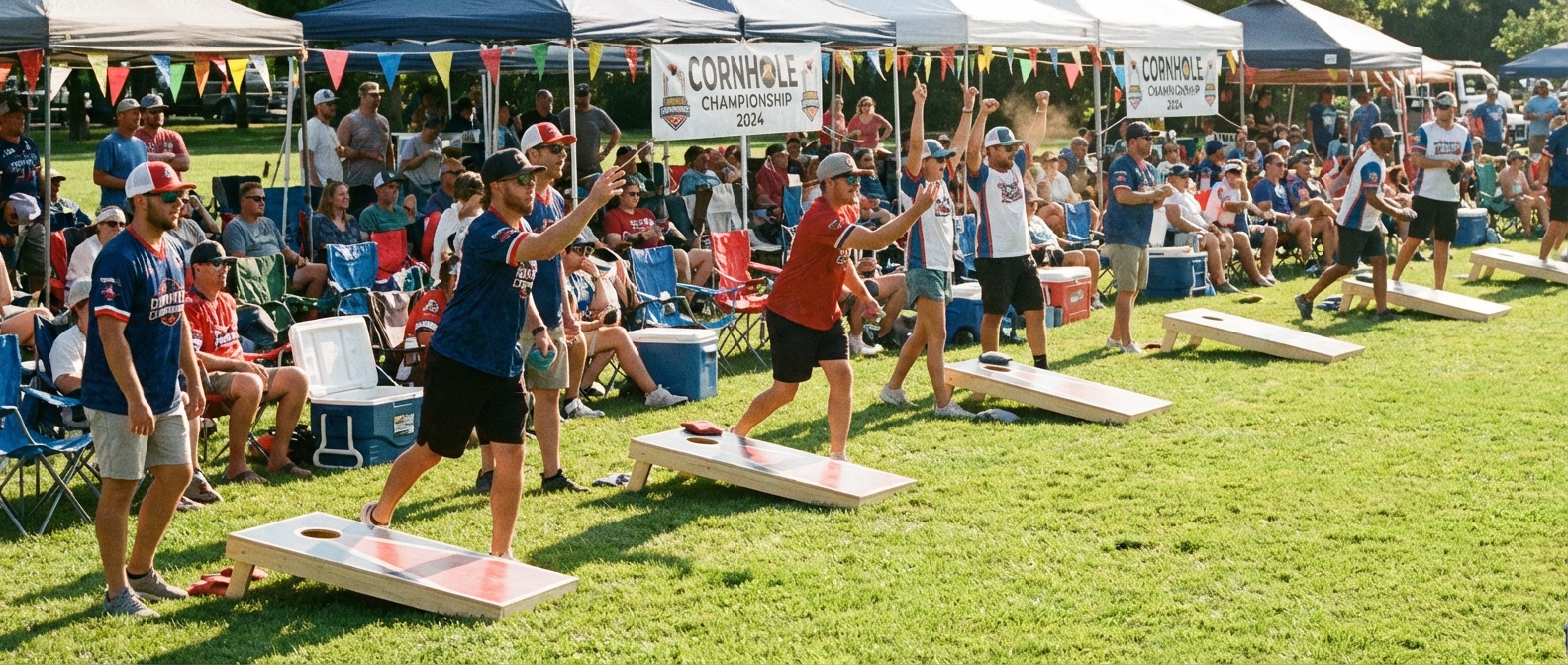
A cornhole tournament looks easy on paper. Boards, bags, brackets. How hard can it be?
Then 24 teams arrive, you brought 4 sets of boards, and someone is asking — for the third time — when they play next while you do bracket math on a napkin. Half the players don’t remember how cancellation scoring works. The first two matches finish at the same time and the next two haven’t been told they’re up.
Running a good cornhole tournament is barely about cornhole. The throwing part runs itself. The hard parts are logistics — format choice, board capacity, time management, and getting information to participants without them having to track you down.
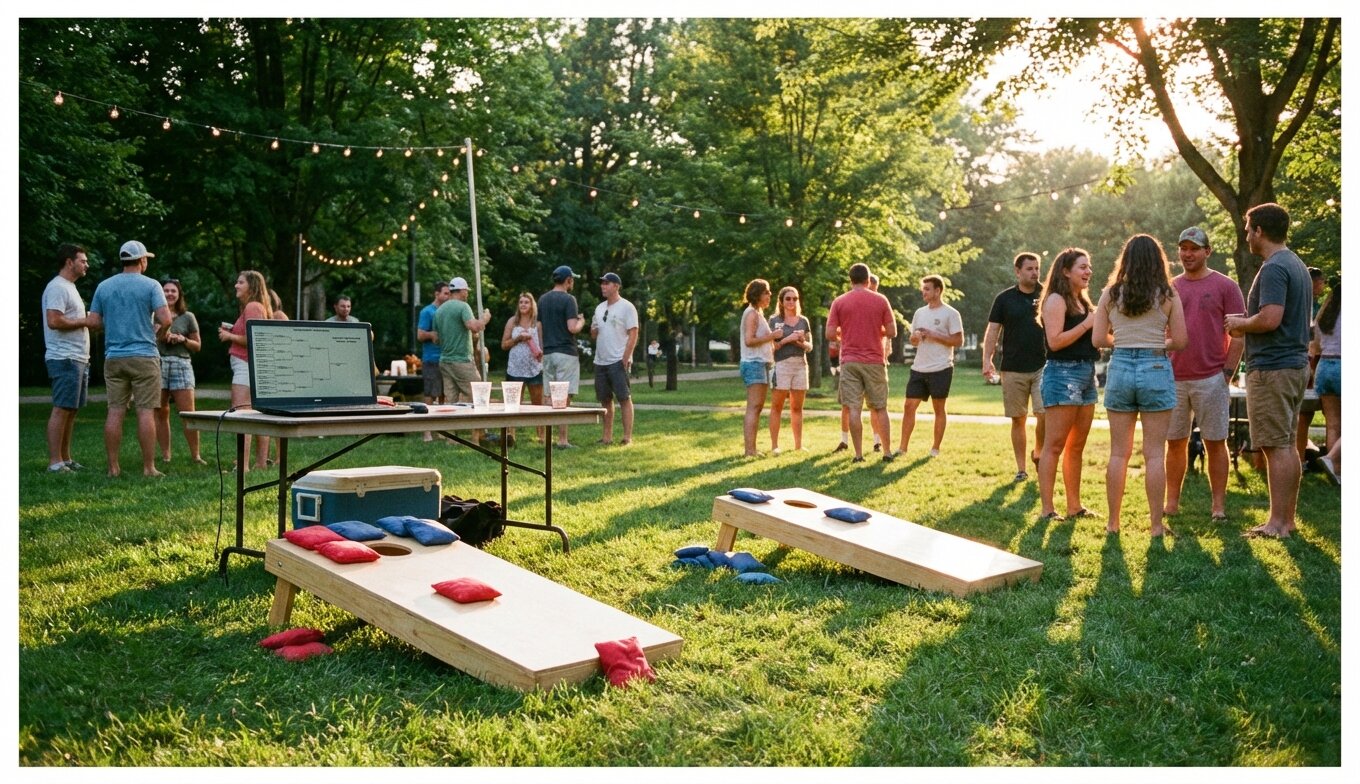
Pick Your Format
This is the first decision and it affects everything else. Total event length, number of boards, whether anyone goes home grumpy.
Double elimination is the standard for serious cornhole, and the ACL uses it for good reason. Every team gets a second chance through the losers bracket. One bad game doesn’t end your day. With 16 teams and a full day to play, double elimination is the right call. You’re looking at around 30 matches.
Single elimination is for casual events and large fields. Got 32 teams at a charity fundraiser with a four-hour window? You don’t have time for double elimination. An 8-team bracket wraps in 7 matches. Quick, clean, gets everyone home before dinner.
Round robin suits smaller groups (6-8 teams) where the social side matters more than the competition. League nights, casual gatherings, end-of-summer barbecues. Use a round robin generator to handle the schedule.
ACL Scoring (The Quick Version)
Bag on the board: 1 point. Bag in the hole: 3 points. Game ends at 21.
The bit that trips people up is cancellation scoring. You don’t add both teams’ points each round. You cancel them. If Team A scores 5 in a frame and Team B scores 3, only Team A adds to the running total — and only by 2, the difference. If both teams scored 5, neither gets anything that frame.
Demonstrate this before the first match starts. Walk up to a board, throw a few bags, run through how the math works out loud. Five minutes of demonstration saves 45 minutes of mid-game arguments later.
A few other rules worth announcing up front. Bags that hit the ground and slide onto the board don’t count. Bags hanging off the edge but not touching the ground do count. The team that scored last in a frame throws first in the next one.
How Many Boards
Boards are the bottleneck that decides how long your event takes. More boards means more simultaneous matches means faster completion. Cheaping out here turns a four-hour event into an eight-hour one.
For 8-12 teams: two sets of boards is the minimum, three is better. With two boards and double elimination, an 8-team event runs about 4-5 hours. Three boards cuts it to roughly 3.
For 16 teams: four boards. Anything fewer pushes you into 8+ hours with double elimination, which is fine if that’s the plan and not fine if it isn’t.
For 32 teams: six to eight boards. At this scale you also need dedicated scorekeepers or a digital tracking system, because organisers can’t be at every board at once.
If you’re buying boards for the event, regulation is 2 feet by 4 feet, set 27 feet apart front-to-front. Don’t shorten the distance. Twenty feet plays completely differently and your serious players will notice immediately.
Time Management
The thing that drags out cornhole tournaments isn’t bad weather or missing equipment. It’s dead time between matches.
A game to 21 takes about 15-20 minutes of actual play. Add five minutes for transition — finding the right boards, getting settled, sorting out who throws first. Budget 25 minutes per match slot.
The biggest single time-saver is parallel match flow. Don’t wait for every match in a round to finish before starting the next round. The moment a board frees up and the next matchup is known, get those teams playing. Losers bracket matches can run alongside winners bracket matches. This requires either a digital bracket or a very organised paper system, but done well it cuts total event time by around 30%.
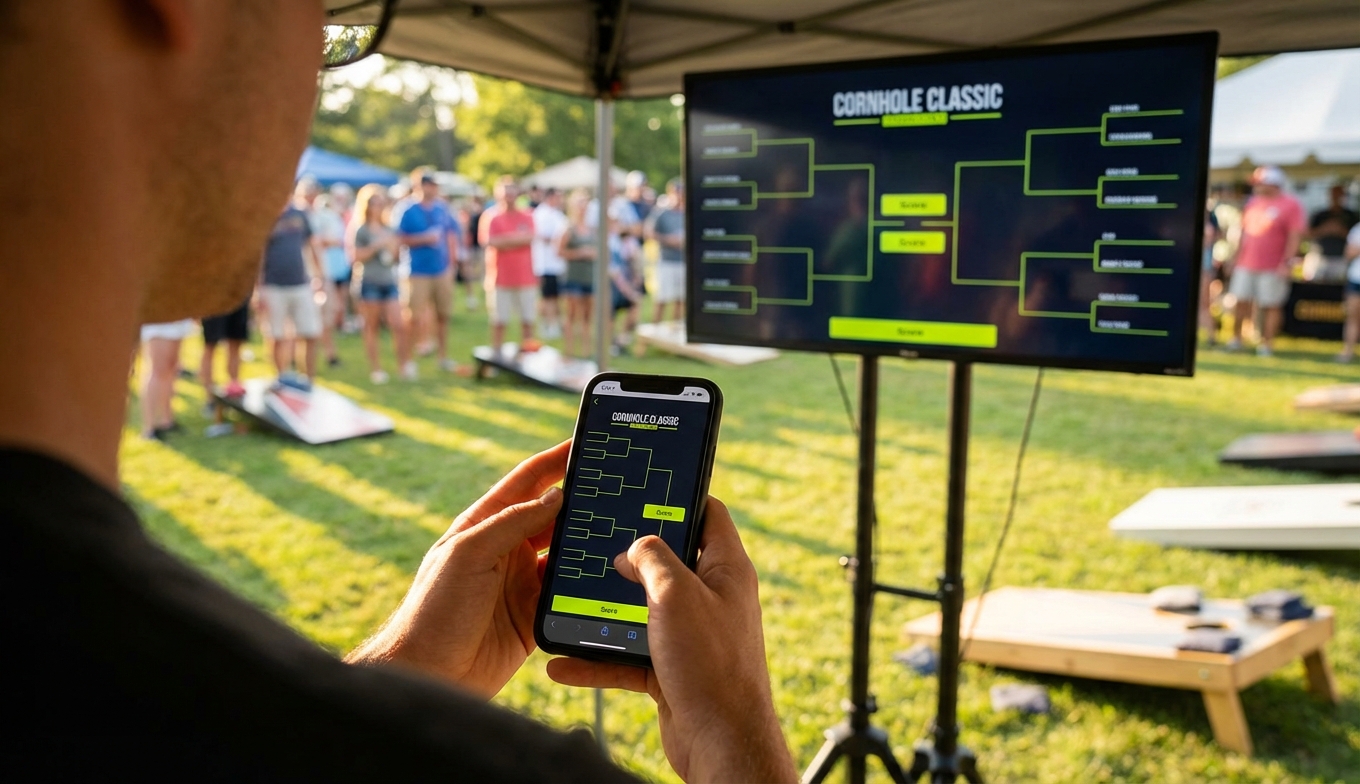
Post the bracket somewhere everyone can see it. A TV or large monitor near the boards works well — players check it themselves instead of asking you. Rise’s TV display mode is built for this. Mount a screen, plug it in, and the bracket stays current as you enter scores from your phone.
Day-Of Checklist
Arrive an hour early. Set up boards and verify the 27-foot distance. Test the surface — too slick, too grippy, uneven? Adjust before players arrive.
Run registration online before the day if you can. Day-of registration with 20+ teams is a mess. If you have to do day-of, set a clear cutoff time and stick to it. Teams not present by the cutoff forfeit.
Assign someone other than yourself to handle disputes. You’ll be busy with the bracket. Pick someone who knows the rules and whose authority players will accept — ideally a respected player who isn’t competing.
Have spare bags. Someone always forgets theirs. Regulation bags are 6 inches square and weigh between 15 and 16 ounces. A few backup sets prevents matches from being delayed while someone runs to their car.
Keeping People Engaged
The biggest risk to a tournament isn’t logistics. It’s boredom. Teams that aren’t currently playing need something to do or they wander off.
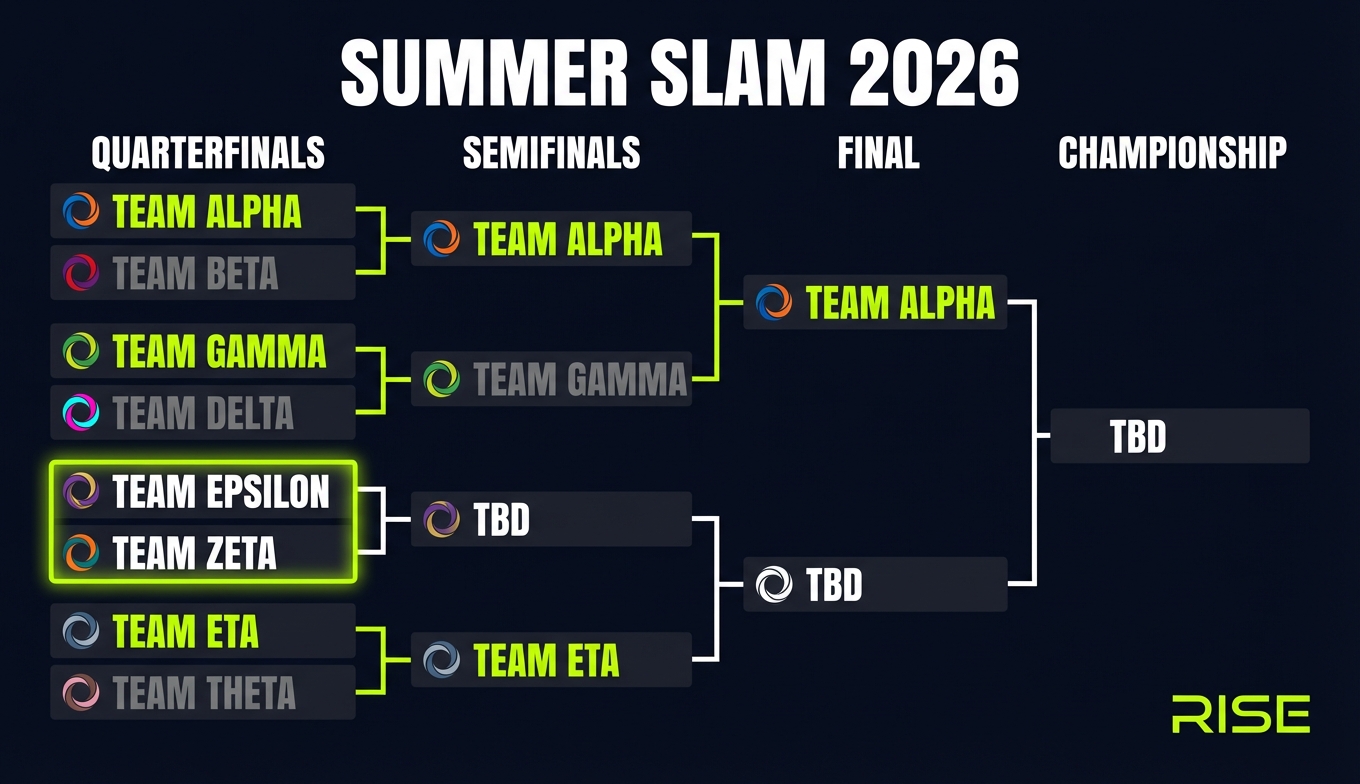
A side challenge board for casual throws. Food and drinks (obviously). A visible bracket or leaderboard that gives spectators a reason to follow other matches. People will watch a match they’re not in if they know the winner plays them next, or if they have something at stake in who advances.
Cornhole tournament brackets on Rise update live as scores come in. Players follow the bracket on their phones, see their next matchup, and know when they’re up — without having to ask. That alone makes the event feel organised, even when behind the scenes you’re improvising.
Join the waitlist to try Rise at your next tournament.