Your best team just lost in round one. In single elimination, they’re done — packing up, heading home, spending the rest of the day bitter about a bad call. In double elimination, they drop to the losers bracket, rip through four straight matches, and meet the team that beat them in the grand final. That’s the magic of the format.
Double elimination tournaments give every competitor a second chance without turning your event into an all-week affair. They’re the standard for competitive cornhole, fighting game communities, beer pong leagues, and pretty much any scene that cares about finding the actually best team — not just the luckiest.
Here’s how to run one without losing your mind.
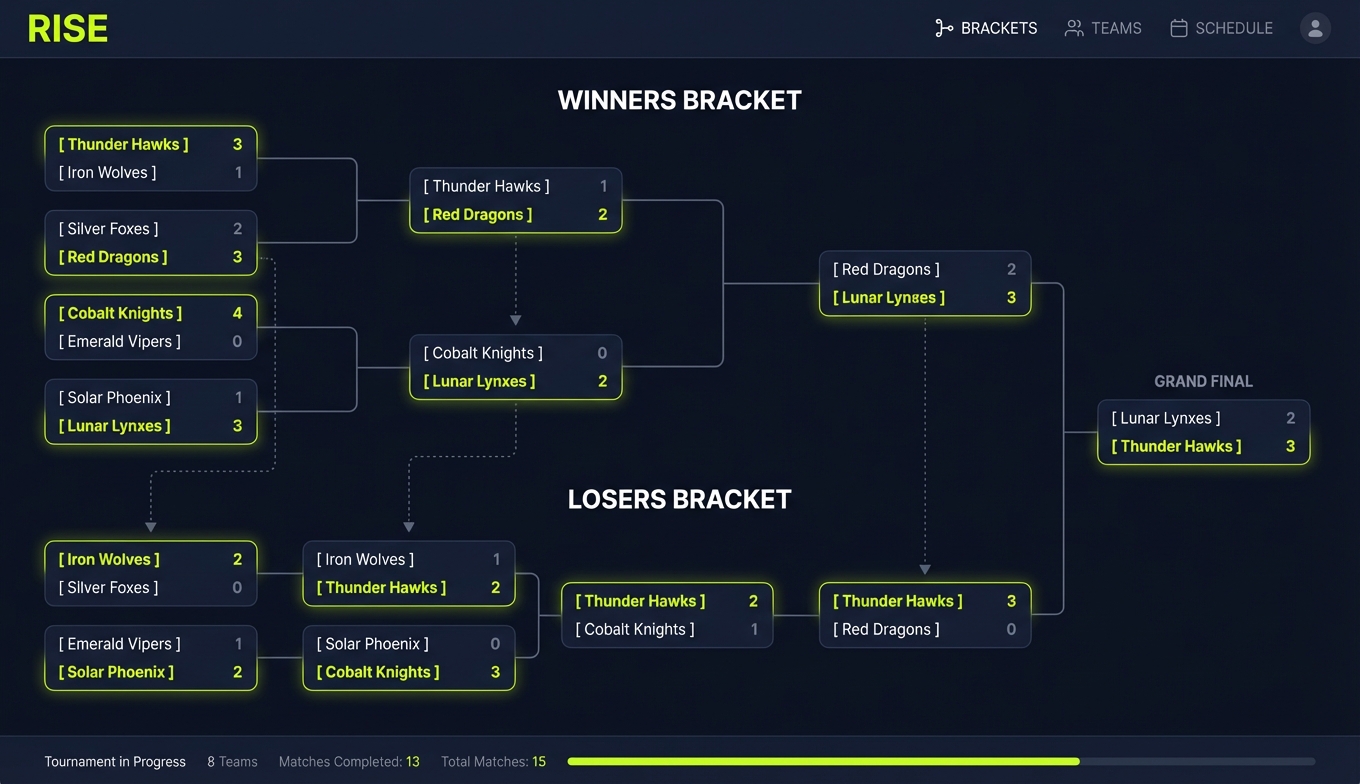
The Two-Bracket System
A double elimination bracket splits into two parallel paths after round one. Winners stay in the winners bracket. Losers drop to the losers bracket. Lose twice and you’re out.
Simple enough in theory. In practice, three things trip people up.
First, the losers bracket has more rounds than the winners bracket. With 8 teams, the winners bracket has 3 rounds. The losers bracket has 4. This means losers bracket matches need to move faster, or your event runs long. Budget 15-20% more time than you would for single elimination with the same number of teams.
Second, teams from the winners bracket feed into the losers bracket at specific points — not all at once. After each winners bracket round, the losing teams drop down and face teams already fighting through the losers side. Getting this crossover wrong is the single most common mistake organizers make.
Third, when a team loses in the winners bracket, they don’t necessarily play their next match immediately. There might be a round or two of losers bracket matches that need to happen first. Tell your participants this upfront or you’ll spend the whole tournament answering “when do we play next?”
What to Tell Your Participants
Before the first match, gather everyone and explain three things:
You have to lose twice to be eliminated. If you lose your first match, you’re not out — you move to the losers bracket. Lose again there and you’re done.
The winners bracket has an advantage. Teams that never lose reach the grand final through fewer matches with more rest time. That’s earned, not unfair.
The grand final has a potential reset. More on that in a second.
That’s it. Don’t over-explain the bracket structure. People understand it once they see their name move on the board. What they can’t handle is thinking they’ve been eliminated when they haven’t.
The Grand Final Reset — The Part Everyone Gets Wrong
The grand final is where double elimination gets controversial. Here’s the situation: one team arrives undefeated from the winners bracket. The other clawed their way through the losers bracket without a second loss. They’re both sitting at one loss or zero.
If the losers bracket team wins the grand final, both teams now have one loss each. Since it’s double elimination — everyone needs two losses to be eliminated — you play a second set. This is the reset.
The undefeated team earned that advantage by never losing. Skip the reset and you’ve broken the entire premise of the format. Some casual tournaments do skip it for time. That’s their call, but participants who understand the format will rightly complain.
If you’re worried about time, announce before the tournament whether you’re playing with or without a grand final reset. Don’t decide in the moment.
How Many Teams? How Much Time?
For an 8-team bracket, expect 14-15 matches total (compared to 7 in single elimination). A 16-team bracket runs 30-31 matches. The math roughly doubles, plus one for the potential reset.
If each match takes 20 minutes including setup and transition, an 8-team double elimination runs about 5 hours. A 16-team? Clear your entire day.
Speed things up by running winners and losers bracket matches on separate stations simultaneously. Two setups cuts your time nearly in half. Three setups and you’re really moving.
Bracket Management
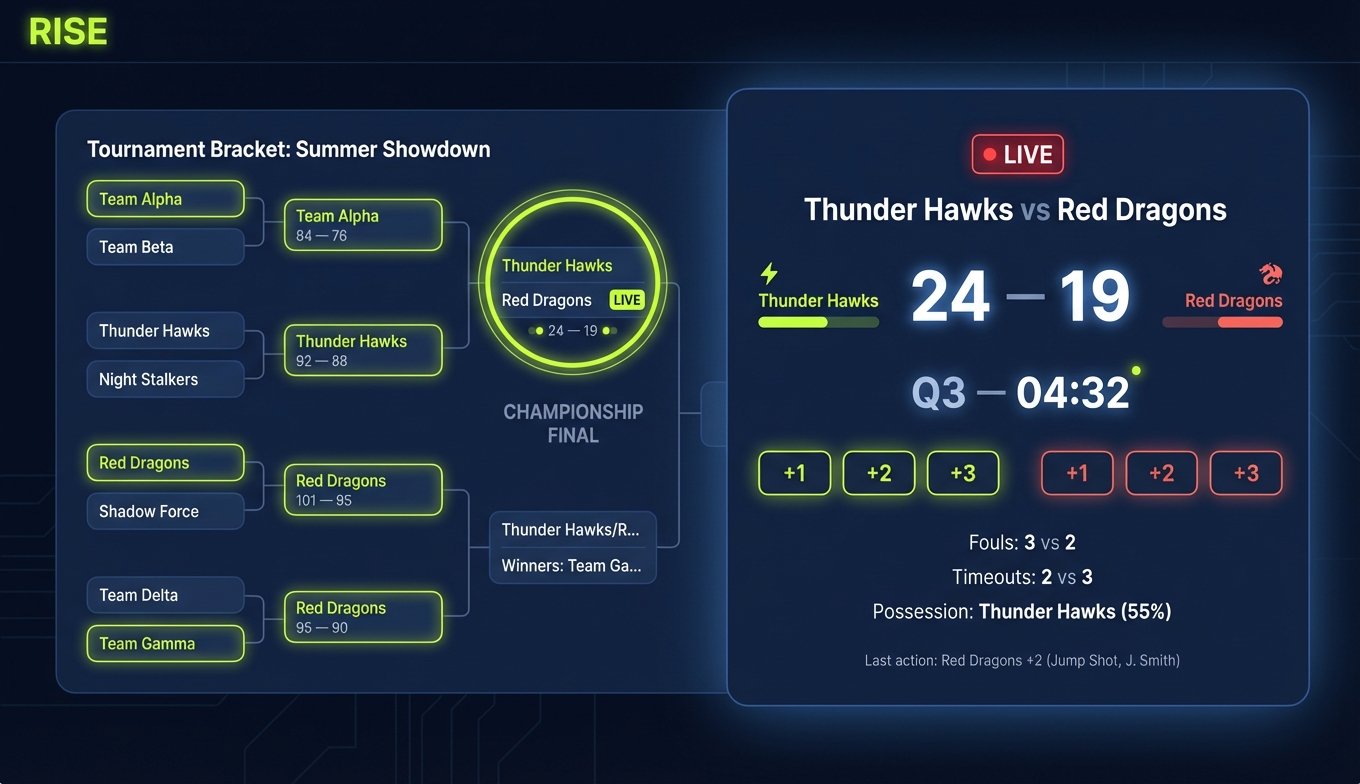
Managing a double elimination bracket on paper is doable with 8 teams. At 16 it’s annoying. At 32 it’s a full-time job. You need to track which teams drop to the losers bracket after each round, slot them into the correct matchup, and keep the whole thing visible to participants.
This is exactly the kind of thing we’re building Rise to handle. The bracket updates live as you enter scores, participants see their next match on their phones, and the crossovers between winners and losers brackets happen automatically.
Join the waitlist if you want to try it.
Quick Seeding Note
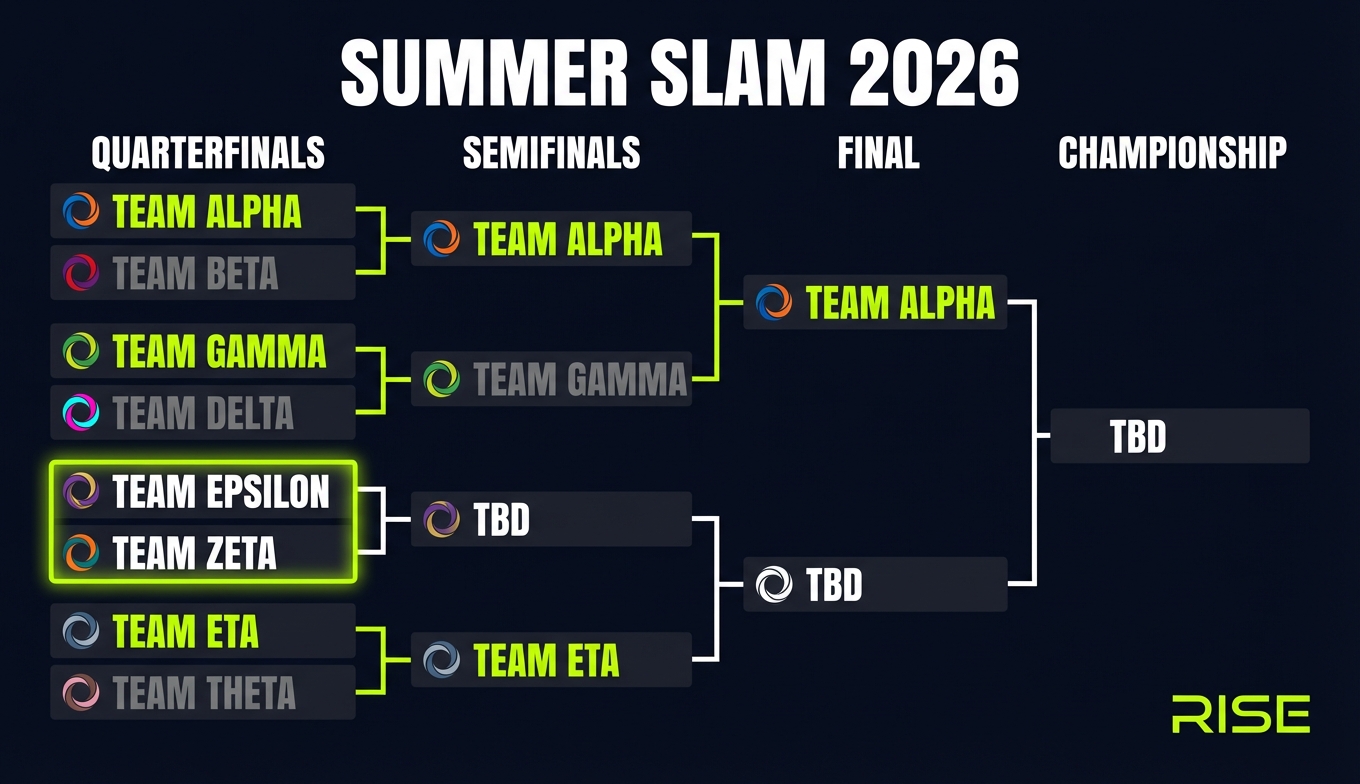
Double elimination brackets benefit enormously from proper seeding. Without it, your two strongest teams might meet in round one — and then one of them grinds through the entire losers bracket just to face the other team again in the grand final. Boring for everyone.
Seed your top competitors apart from each other. Put #1 vs #8, #2 vs #7, and so on. Your bracket and your audience will thank you.