Your best team lost their opening match because their star player was stuck in traffic. In single elimination, their tournament is over. In round robin, it’s a bad start — not a death sentence.
That’s the fundamental tension between these two formats. One prioritizes time. The other prioritizes fairness. Neither is wrong, but picking the wrong one for your situation will make everyone miserable.
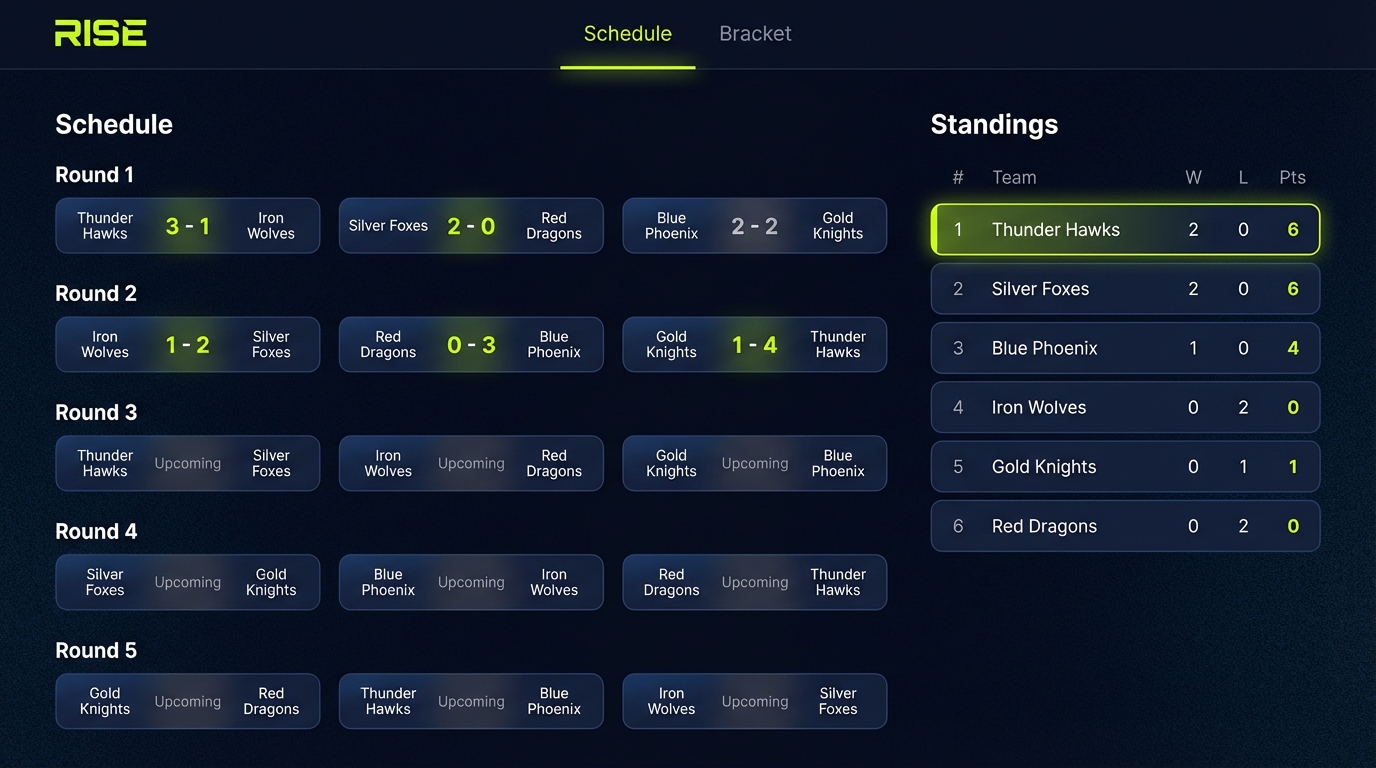
Round Robin: The Fair One
In a round robin, every team plays every other team. No draws of fate, no bracket luck. The team with the best record wins. If you want to know who’s actually the best, this is how you find out.
The cost is time. Eight teams means 28 matches. Running three at a time on parallel courts, that’s still 9-10 rounds. An afternoon disappears fast.
But here’s why round robin is worth it when you can afford the time: it eliminates flukes. A team that wins one lucky game doesn’t ride that single result to a championship. They have to prove it over and over again, against every opponent.
Use a round robin generator to build the schedule. Doing it by hand with 8+ teams is surprisingly annoying — you need to make sure every team gets roughly equal rest time between matches and that the schedule doesn’t accidentally give one team three consecutive games while another team sits idle for an hour.
When to use round robin
Six to eight teams with a full day or multiple weeks. League formats where standings matter. Tryouts or evaluations where you need to see every possible matchup. Social events where the point is playing, not winning — round robin guarantees everyone gets plenty of games.
When to avoid it
More than 10 teams in a single day. You physically won’t finish. Twelve teams is 66 matches. Even running four at a time, that’s a 16-round gauntlet nobody signed up for.
Single Elimination: The Fast One
One loss and you’re done. Harsh? Absolutely. But there’s a reason March Madness is the most exciting tournament in American sports and the NBA regular season is background noise until the playoffs.
Single elimination creates stakes that round robin can’t match. Every game matters completely. There’s no “we’ll make it up next round.” That pressure produces drama, upsets, and moments people remember.
An 8-team bracket runs 7 matches across 3 rounds. You can finish in two hours. A 16-team bracket takes 15 matches across 4 rounds — still a half-day event at most. The efficiency is unbeatable.
The problem everyone knows: the best team doesn’t always win. One bad game, one bad ref call, one player rolling an ankle in warmups — and the top seed goes home in the first round. For casual events, that’s part of the fun. For competitive scenes with rankings and prizes, it’s a real issue.
When to use single elimination
Large fields (16+ teams), limited time, or events where the experience matters more than the outcome. Company ping pong tournaments. Neighborhood cornhole brackets. Any event where you need to be done by dinner.
When to avoid it
When people travel significant distances or pay entry fees. Getting knocked out in one game after a two-hour drive feels terrible, and it should — because it is terrible.
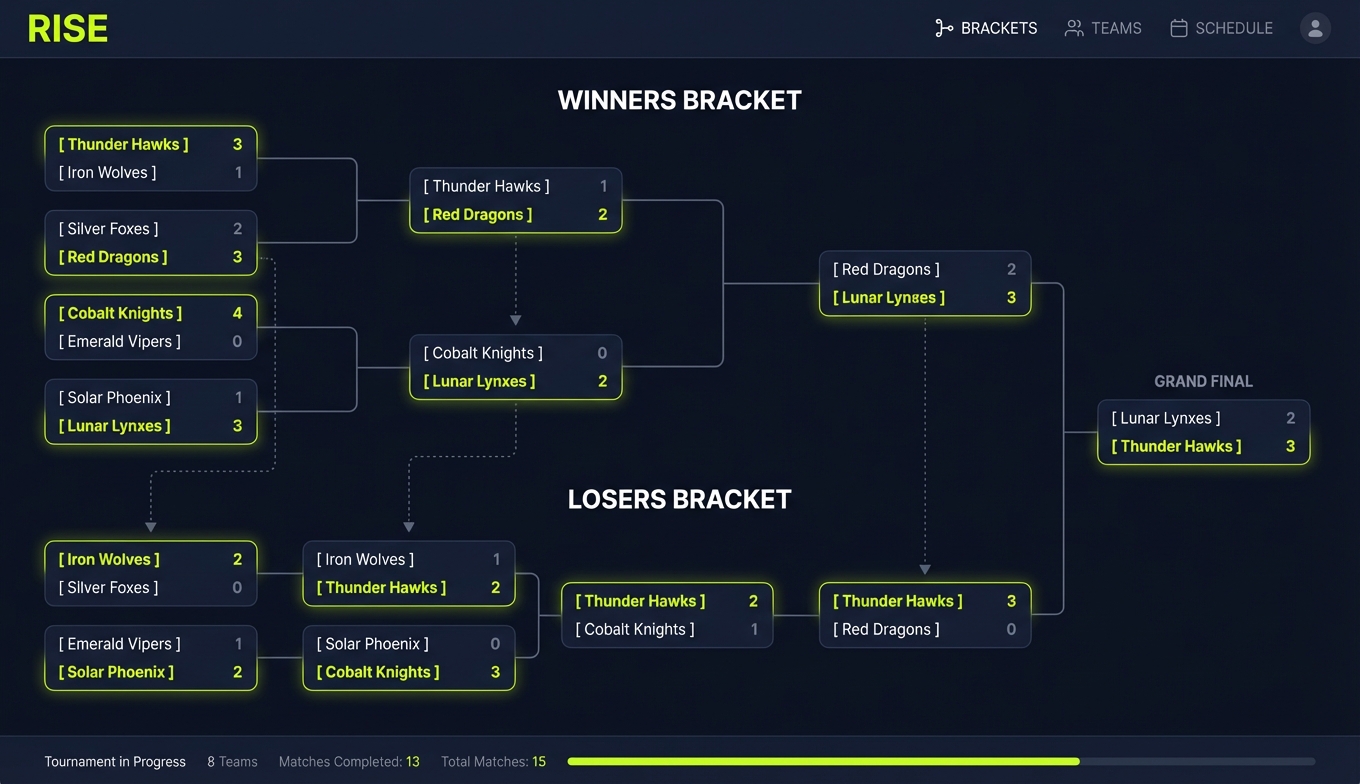
The Middle Ground: Double Elimination
Can’t decide? There’s a third option, and honestly, it’s the best one for most competitive events.
Double elimination gives every team a second chance. Lose once and you drop to the losers bracket. Lose twice and you’re out. It takes roughly twice as long as single elimination — so an 8-team event runs 14-15 matches instead of 7 — but it solves the biggest complaint about single elim without requiring the massive time commitment of round robin.
The team that loses in round one because their star was late? They get to come back. The underdog that got a fluky win? They have to prove it wasn’t a fluke. And the grand final almost always features the two best teams because you need two bad performances to get knocked out.
For competitive play — anything with rankings, entry fees, or real prizes — double elimination is the better format. Full stop.
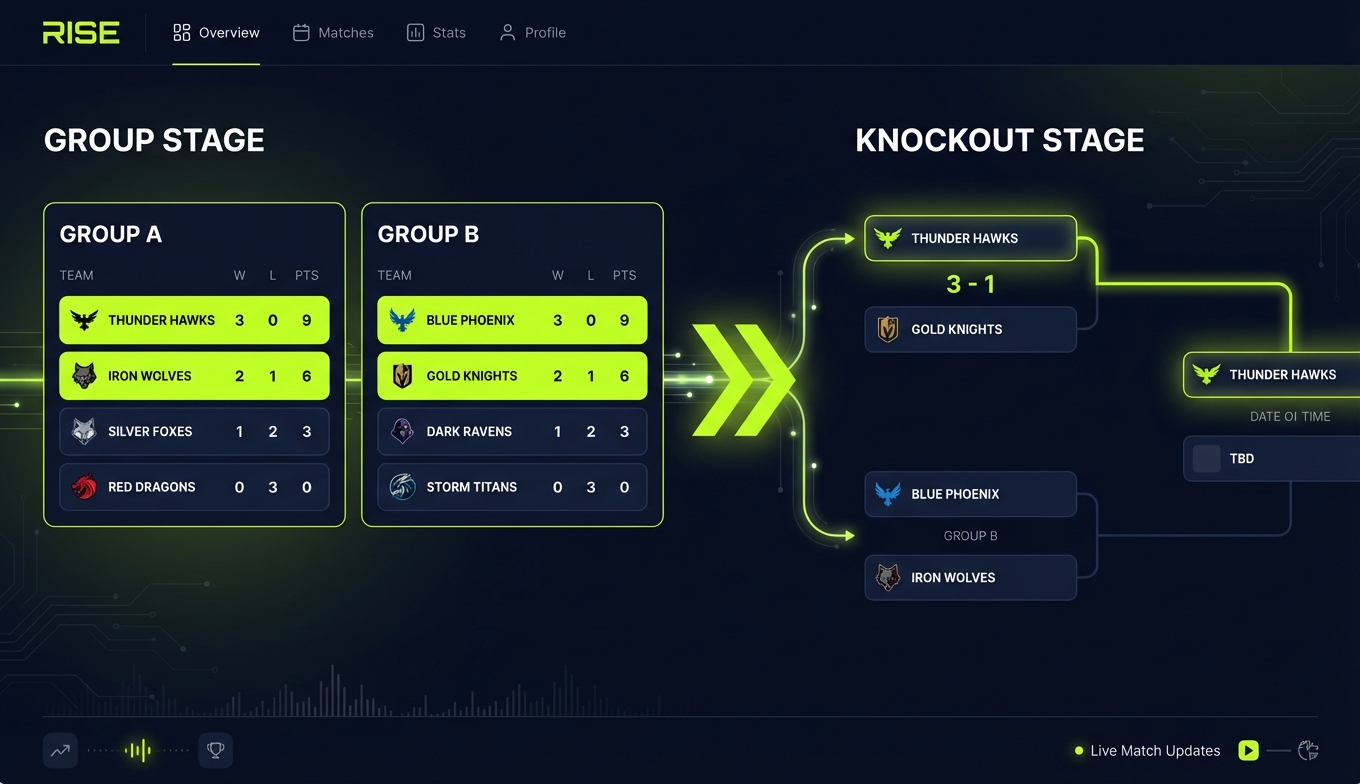
The Decision in 30 Seconds
Got 6-8 teams and a full day? Round robin.
Got 12+ teams and half a day? Single elimination.
Got 8-16 teams and a full day with something actually at stake? Double elimination.
Rise is building all three formats with live brackets, automatic scheduling, and TV displays that keep everyone in the loop. Join the waitlist to be first in line.